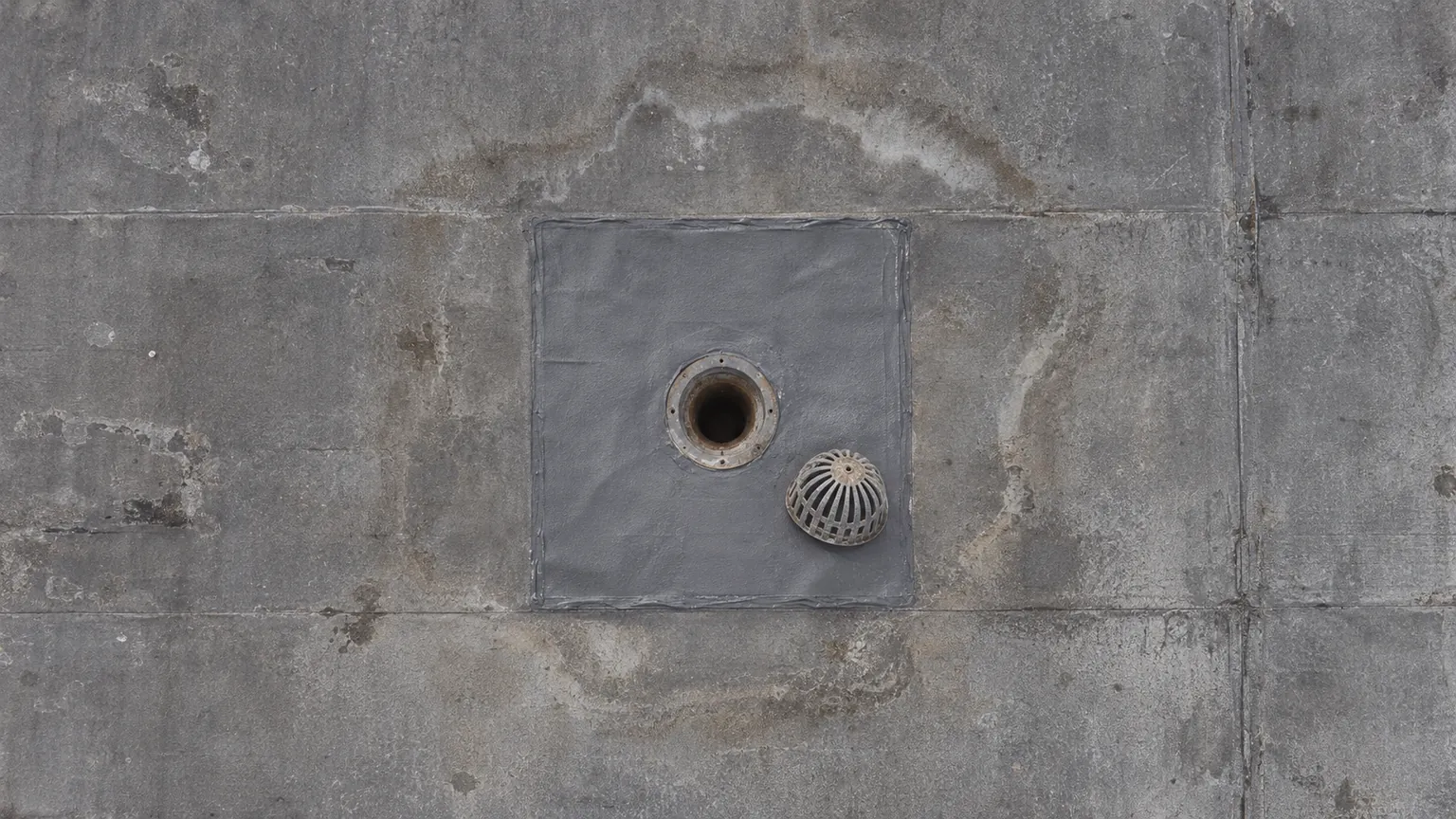
Flat Roof Repair
Low-slope roofs on warehouses and plants: blister work, lap repair, drain rebuilds, and wet insulation cut out and replaced with dry material.
Flat roof repair details
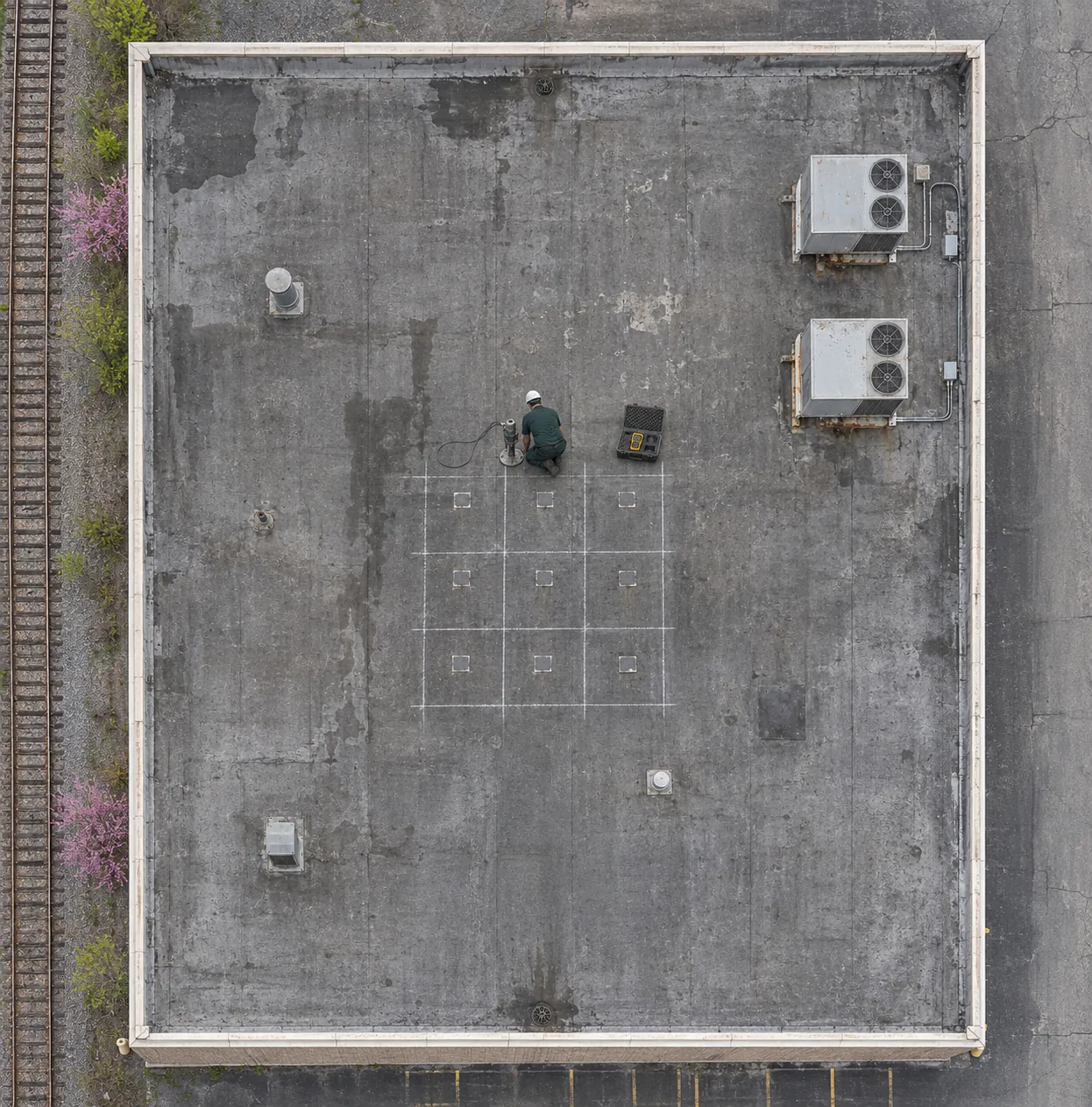
We provide commercial roof repair services in Erie for flat, metal, leaking, and industrial roofs on plants, rail shops, and warehouses.
Our commercial roof repair services in Erie split by roof type and by problem. Each card names the details that service repairs.
Low-slope roofs on warehouses and plants: blister work, lap repair, drain rebuilds, and wet insulation cut out and replaced with dry material.
Flat roof repair details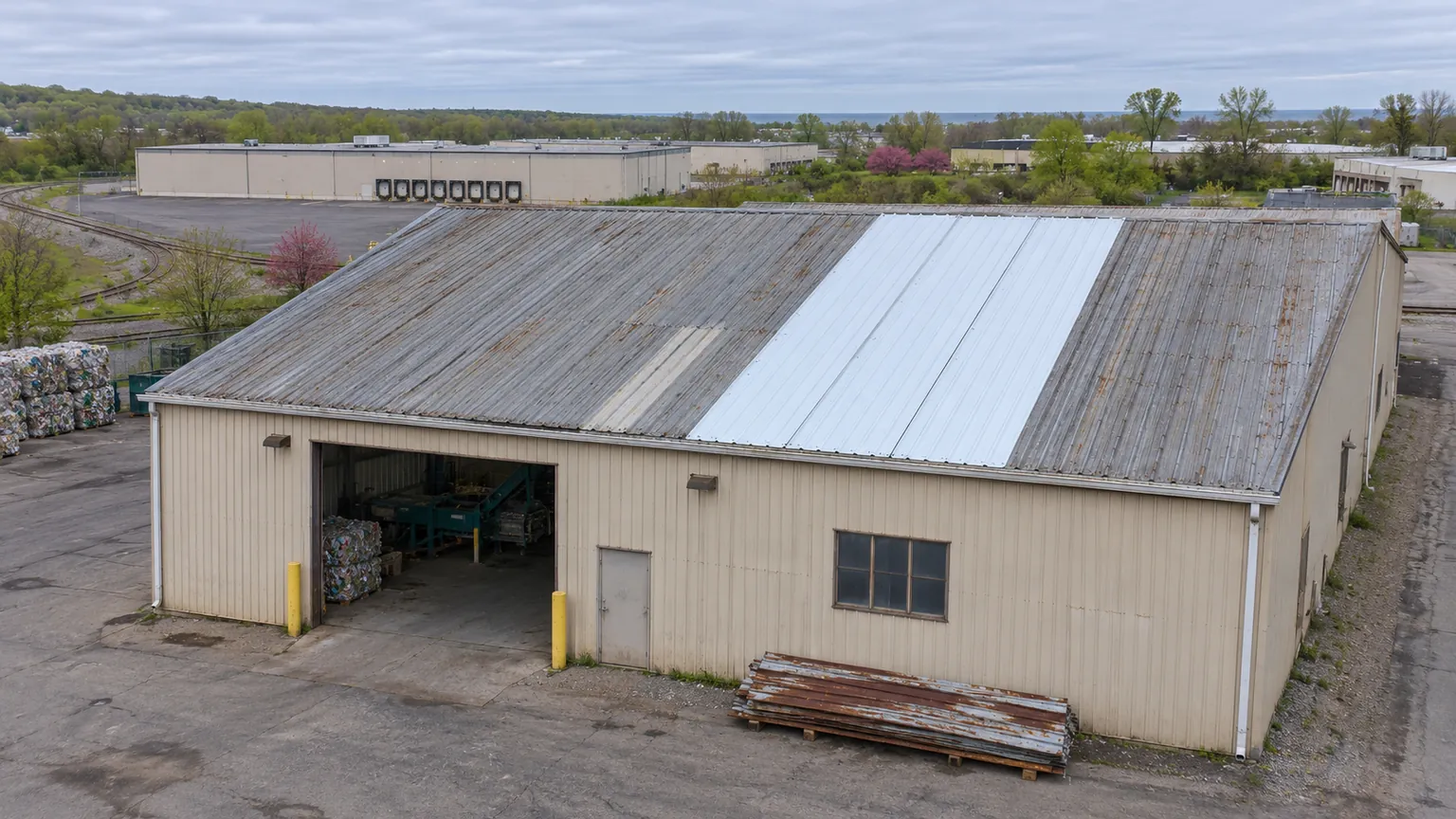
Steel panel roofs on shops and plants: curb flashing reattached, worn panels swapped, screw rows corrected, and hail damage sorted from dents.
Metal roof repair details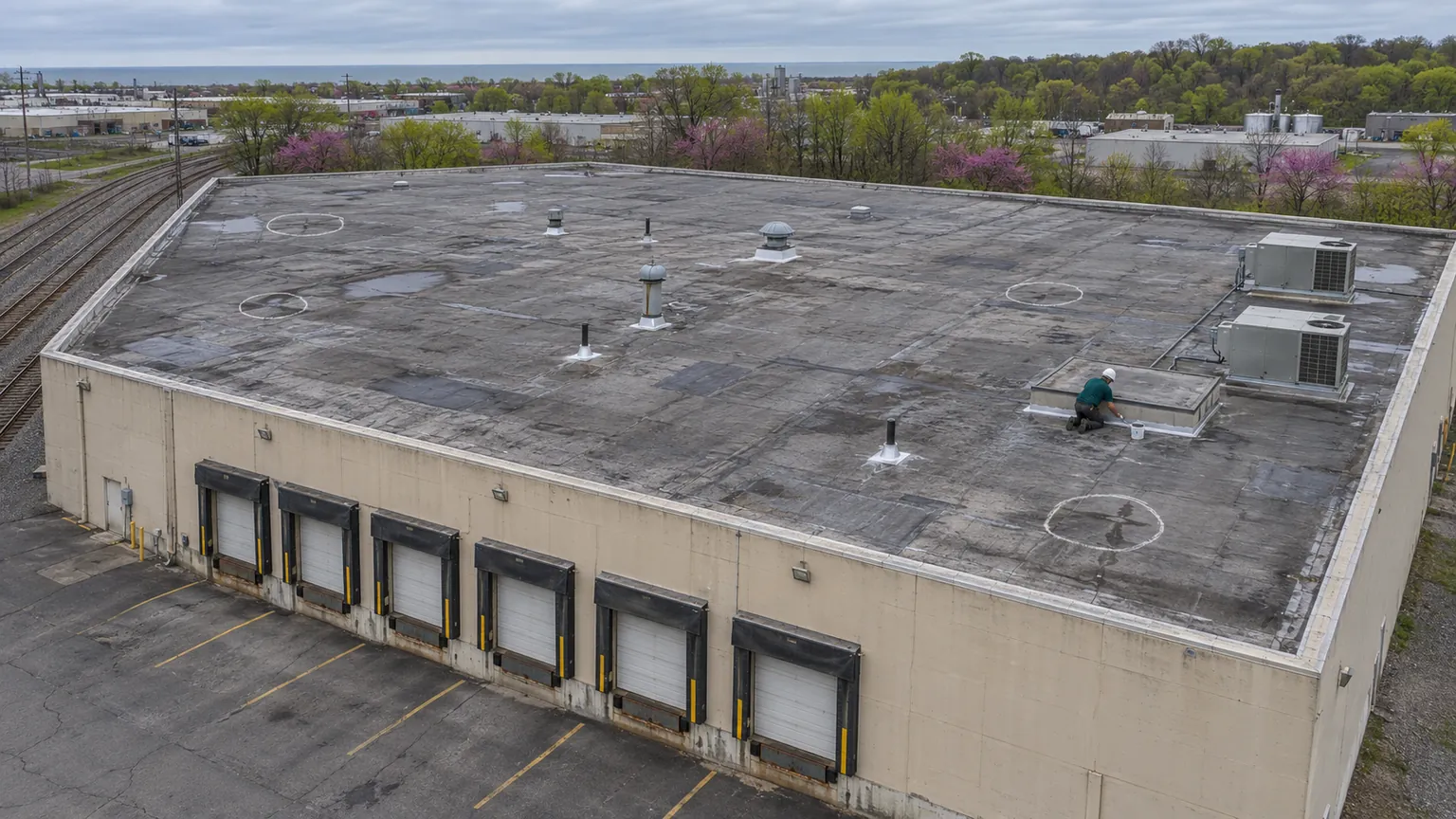
Leaks traced from the drip back to the entry point, at parapet coping, ice-dammed edges, overloaded outlets, and dock-wall transitions.
Leak repair details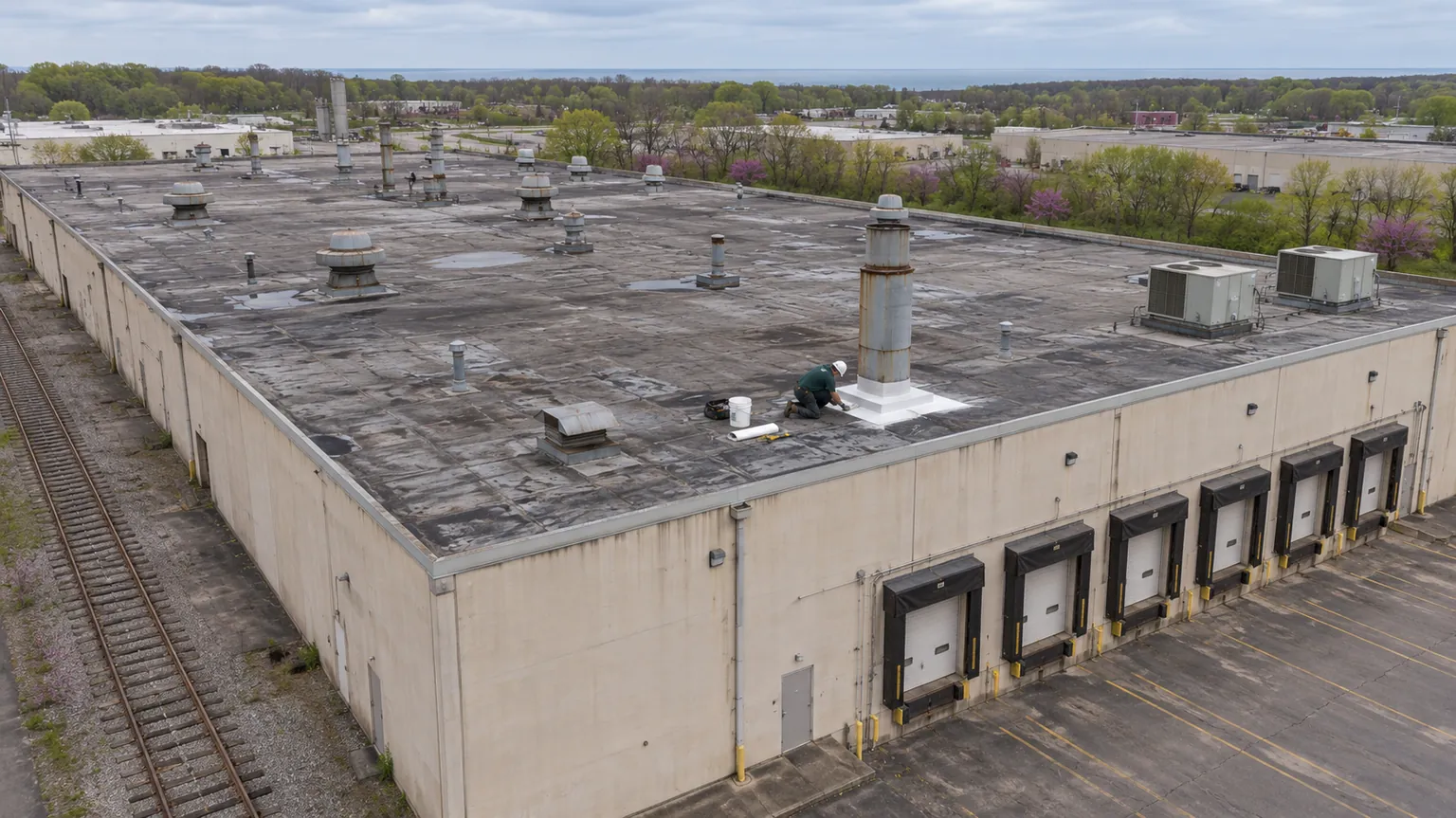
Roofs over molding lines and rail shops, repaired around exhaust fans, stacks, and drains with the floor below protected first.
Industrial repair details| Building Type | Flat Roofs | Metal Roofs | Leak Tracing | Industrial Roofs |
|---|---|---|---|---|
| Plastics Molding Plants | Outlet and seam repair | Curb flashing at openings | Rain-only leaks traced | Work staged over lines |
| Rail Equipment Plants | Ice-dam edge repair | Loose curb flashing | Roof and equipment water sorted | Drain and deck rebuilds |
| Port Warehouses | Low insulation at drains | Rust at eaves and laps | Parapet cap leaks | Rarely |
| Older Brick Plants | Patch joints after freeze-thaw | Rarely | Wall entry versus roof | Damp traced past repairs |
| Racked Storage Warehouses | Blisters by traffic paths | Thinned screw holes | Water traced past racks | Rarely |
Most roofs we inspect need repair. A few need a replacement plan, and the inspection shows which one you have.
Repair cost follows the inspection: how the leak is traced, the roof system, how many areas are damaged and how large, core results, flashing, drains, and how the roof is reached.
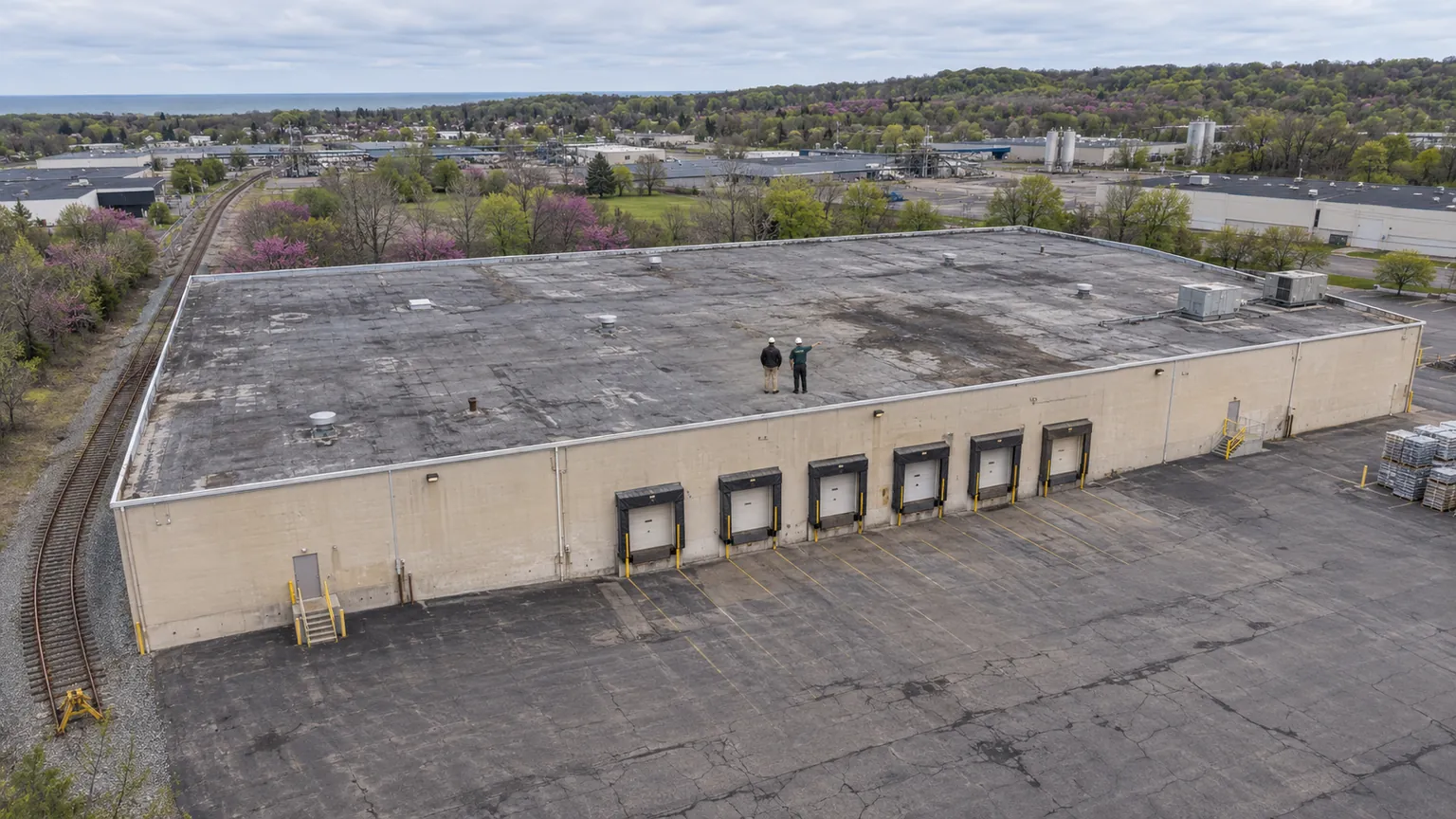
Send the building type, the roof system if you know it, and where water shows. We sort out which repair fits during the roof walk.
Get A Free EstimateEvery service follows the same five steps, so you know what happens next on any roof.
Leak locations, timing, how the roof is reached, and any recent roof or equipment work start the planning before anyone climbs up.
We walk the roof, cut cores where water is suspected, and photograph each defect we find.
Findings decide between a spot repair, a section rebuild, or staged work toward a replacement.
Work runs in the agreed order around occupied areas, with each opened section closed before the crew leaves.
Photos and notes for each repaired detail, plus any conditions to watch, go to you for the building file and the next inspection.
One failure each service handles most, and what the repair does about it.
Moisture trapped under membrane keeps staining ceilings and softens the deck over time.
Wet board is cut out to the deck and replaced before the membrane is closed.
Screws in thinned steel stop seating and let water run along the purlins.
Patch plates or new panels give the fastener solid metal to hold.
Water entering at a wall cap shows up as a roof leak several feet away.
The trace follows coping, masonry, and flashing, and the repair goes where the water enters.
Vibration and exhaust deposits keep breaking the curb flashing around plant fans.
Curb and flashing are rebuilt after the equipment cause is handled.
Debris at drains and scuppers backs water onto every kind of roof during heavy rain.
Outlets are cleared, strainers reset, and the seal around each drain checked during every repair visit.
How the four services fit together, and what happens when a roof needs more than one.
Ask for an estimate and describe where water shows. The roof walk decides the service: flat roof repair for membrane and drains, metal roof repair for panels and curbs, leak repair when the source is unclear, and industrial repair when production sits below.
Yes. Buildings with a metal addition beside a flat roof get one inspection covering both, and the scope lists each repair by roof area. The joint where the two roofs meet is checked as its own detail.
We do. Every roof we work on was installed by someone else, so the first step is identifying the system, the layers, and any past patches before matching materials to them.
Flat roof repair usually covers the membrane and drains, and industrial roof repair adds the planning for production below. On plastics plants we often run both under one scope, with the line protected before any section is opened.
Each repair area gets a line: its location on the roof, the condition found, the material to be used, and the size. Areas noted but left for later get their own lines so nothing is forgotten.
Photos of each repaired detail before and after, core results, and notes on conditions to watch. Those records help with insurance questions, lease discussions, and the next inspection.
Yes. Repair documents should describe insulation or deck work along with the surface repair, so the reviewing authority sees the full scope under the Pennsylvania Uniform Construction Code framework.
Most scopes hold through one season. A winter of lake-effect snow or a hail storm can change the roof, so we recheck the listed areas before work starts if the scope is more than a few months old.
Tell us about the roof and where water shows. We match the repair to what the inspection finds.