Detail Repair
- Panel Metal
- Firm with surface rust only
- Screw Holes
- Round and holding a fastener
- Curb Flashing
- Loose but sheet intact
- Work Area
- One curb or lap run
- Next Step
- Reattach, reseal, and refasten
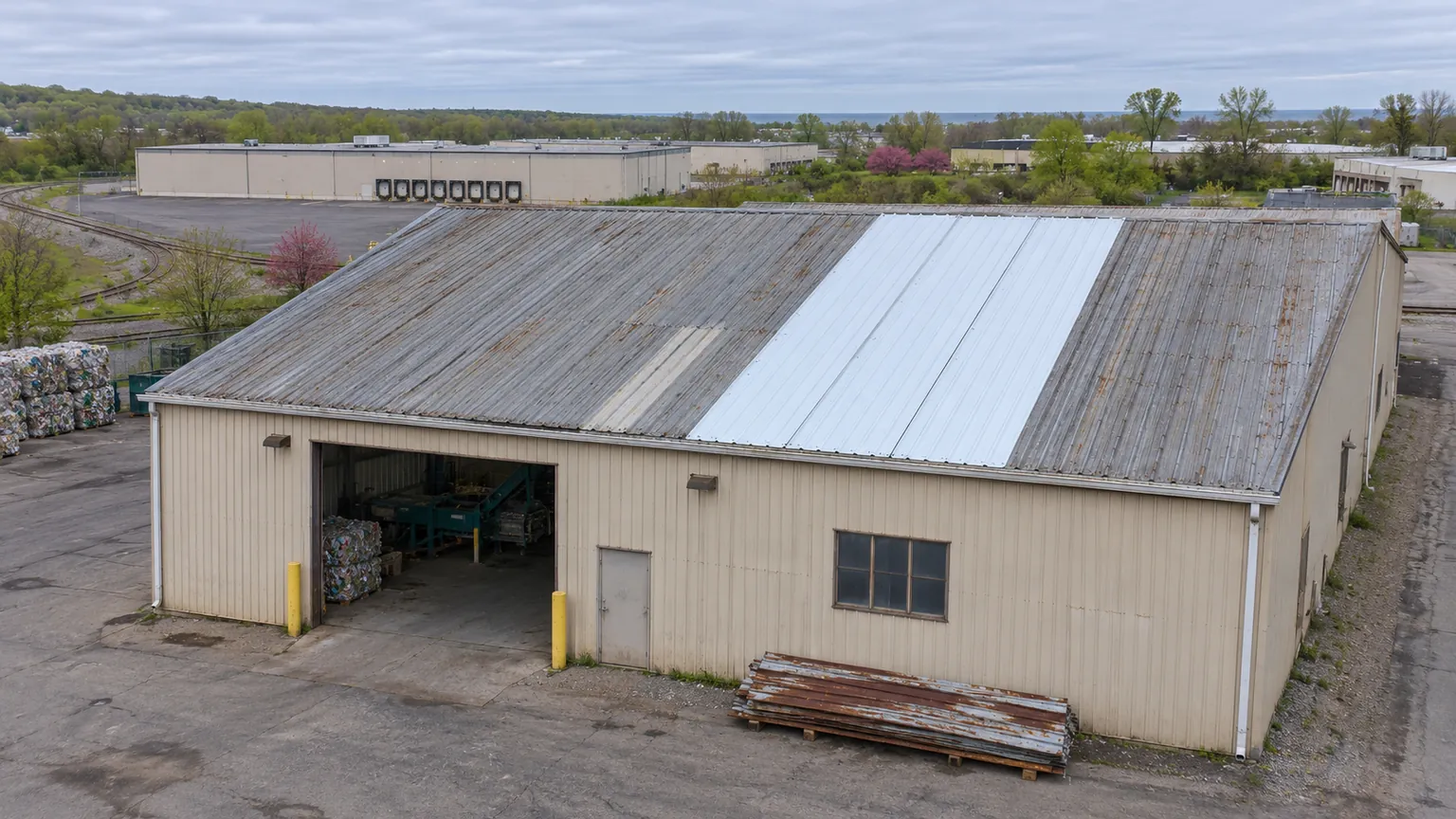
As an Erie commercial metal roof repair contractor, we reattach curb flashing, replace thinned panels, and correct leaking screw rows on steel buildings.
Erie commercial metal roof repair keeps intact panels in place. When the steel itself has thinned or rusted through, those panels come out and new ones go in.
Metal roofs show leaks in odd places. These pairs link the drip indoors to the panel detail we usually find above it.
Drips land on equipment directly under an exhaust or HVAC opening.
Curb flashing has separated where the curb shifted, and panel movement keeps the joint working loose.
Brown streaks run down the purlin and spot the floor in a straight line.
Screws have backed out or spun in thinned metal, so the washer no longer seats.
A few new drips appear the week after a storm, usually near the ridge.
Impacts cracked a seam or knocked a flashing loose; most dents in the open field hold water out.
The wall below the eave stays damp and the base angle rusts.
Panels at the eave have rusted through where snow sat against them all winter.
Each method fixes the connection that failed, so the repair holds when panels expand and contract with the seasons.
Loose flashing gets mechanically reattached to a stable curb and lapped under the upslope panel, with sealant used as a backup at the joint.
Round holes in firm steel take an oversized screw with a new washer; thinned or torn metal around the hole gets a patch plate or a panel swap.
Seams, flashing, and vent caps get checked for cracks after a storm, and repairs go where water can enter, leaving cosmetic dents on the record.
Rusted-through panels are replaced with the same rib profile and gauge, lapped and fastened to the existing purlin pattern.
Metal roofs fail at connections. Here is each common failure beside what the repair changes on the roof.
Curb flashing held only by sealant pulls free as the equipment and panels move.
Mechanical attachment to the curb holds the flashing still, so sealant only backs up the lap.
Another screw in weakened metal closes the hole briefly and then loosens again.
A patch plate or new panel restores a solid connection for the fastener.
Snow held against the eave rusts the panel ends until water runs behind the wall.
New panel ends and eave closures replace the steel that rusted away.
Laps lose their sealant tape and open on wind-driven rain from the lake side.
Laps get cleaned, resealed, and stitched at the spacing the panel profile calls for.
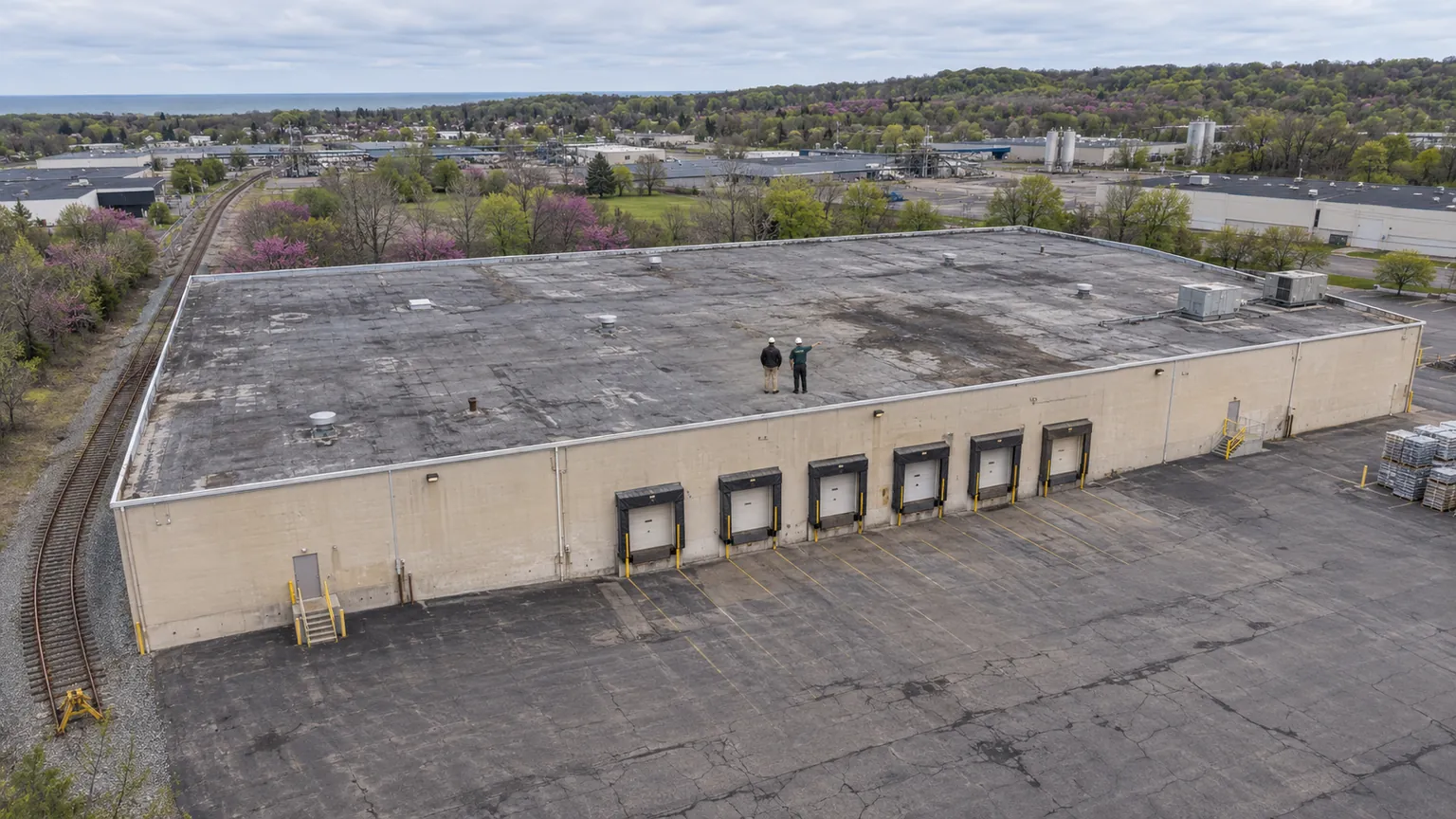
Tell us which opening is above the drip and when it leaks. We check the curb, the flashing attachment, and the panels around it before quoting the repair.
Get A Free EstimateMetal repairs follow five steps, from the panel survey to the final photo record.
We walk each run, check curb stability and panel movement, and mark loose screws, open laps, and rusted ends.
Leak reports and rust streaks inside get matched to the roof marks so the repair list covers every entry point.
The scope names each curb, lap run, and panel to replace, with the profile and gauge noted for ordering.
Flashing is reattached, laps are resealed, and worn panels come out for new ones fastened to the purlins.
Every repaired connection gets checked, metal shavings come off the panels, and each detail is photographed.
Metal buildings often sit beside flat sections, plant equipment, or leaks that start somewhere else. These services cover them.
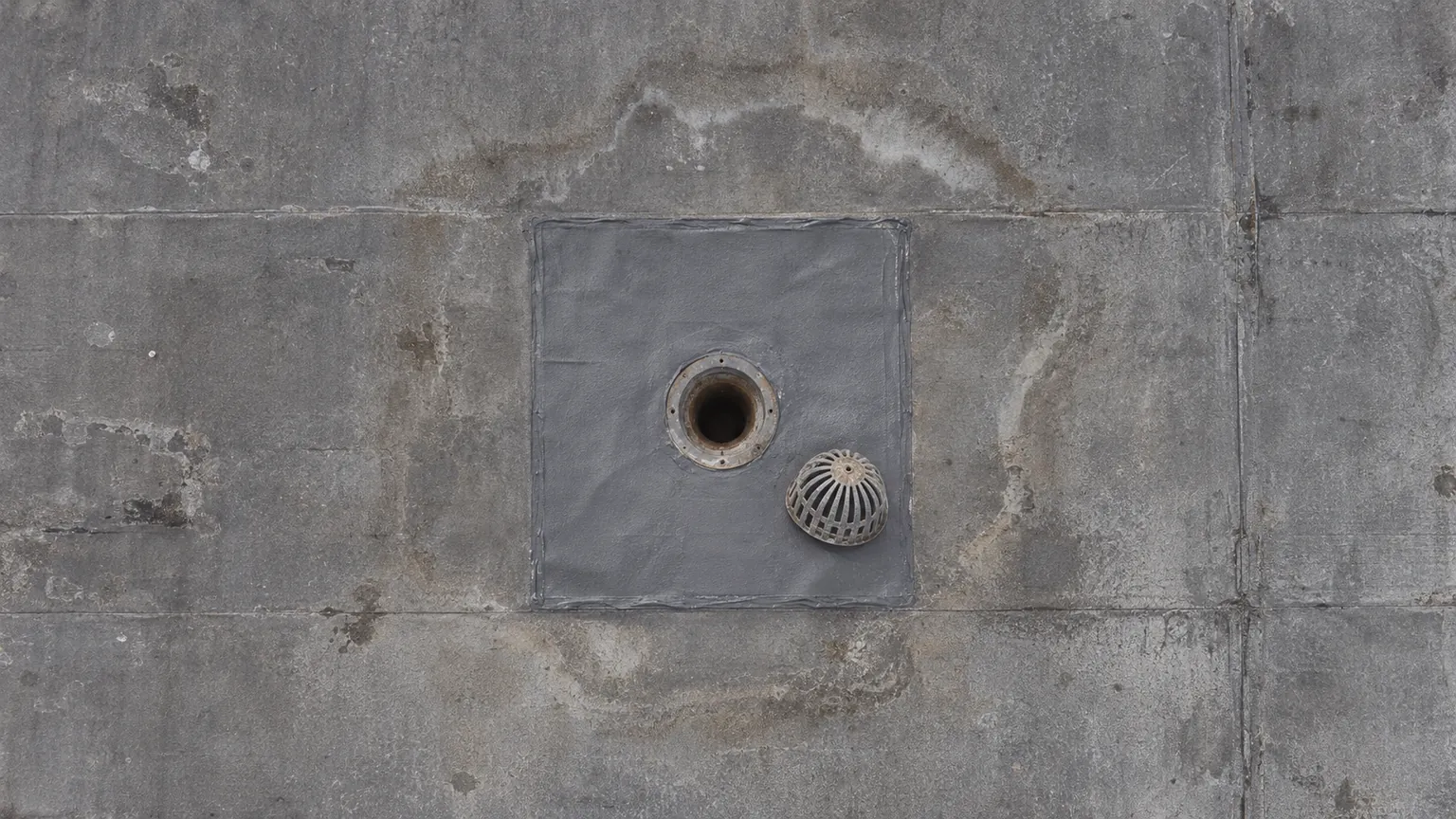
Low-slope sections beside a metal building need membrane laps and drains repaired where the two roofs meet.
Flat roof repair details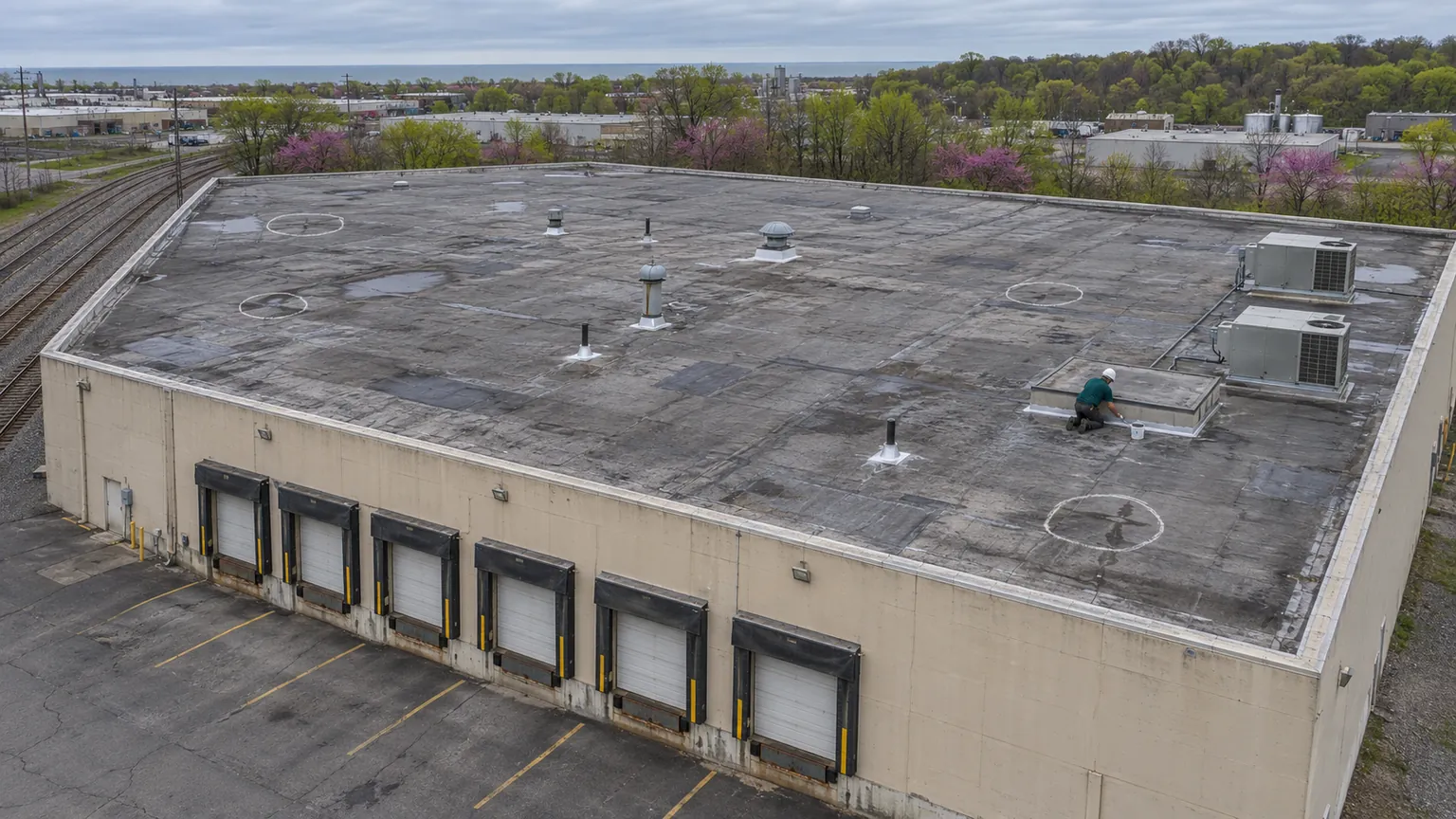
Stains far from any panel lap usually mean water is running along a purlin, so the entry point gets traced first.
Leak repair details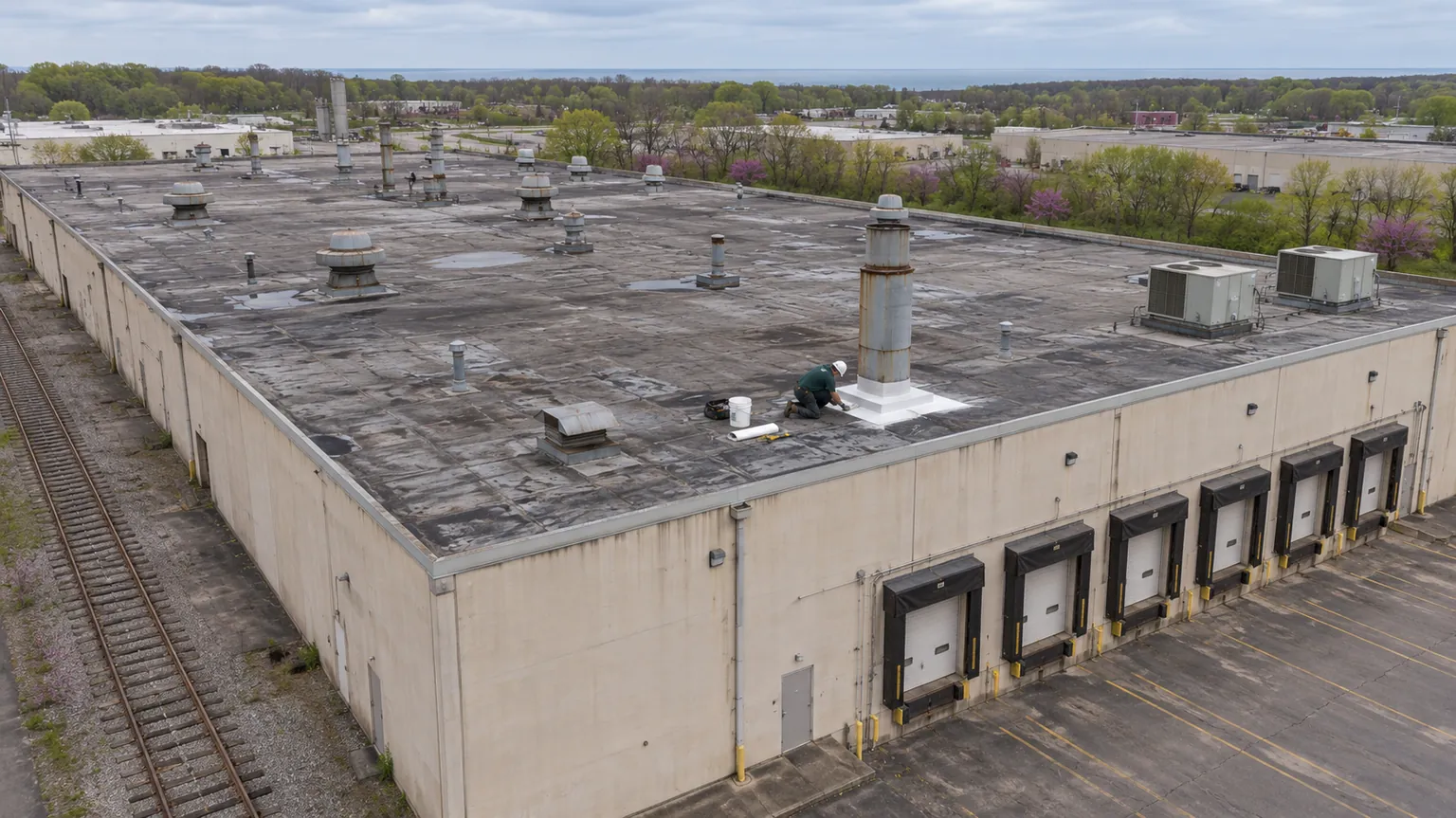
Exhaust openings on plant buildings move with the equipment, which ties curb repair to the equipment service schedule.
Industrial repair detailsAnswers on curb flashing, hail, equipment openings, and screw holes in steel panel roofs.
By fixing the attachment that let it separate. We check whether the curb is stable, how much the panels move, and the condition of the metal next to it. A new bead of sealant leaves the flashing free to move, so the repair reconnects solid parts.
Openings bring flashing, attachment, and panel movement together in one spot. We inspect the curb connection and nearby seams before blaming fasteners elsewhere. Sealant spread across the panel field leaves the actual opening detail untouched, so the repair goes where the water enters.
Connections. Curb flashing, side laps, and screw washers account for most leaks we trace on steel roofs, because each one moves as panels heat and cool. Open field panels between those details rarely leak unless rust has eaten through them.
Only where the impact opened a path for water. We inspect seams, flashing, and fasteners after the storm and separate those breaks from surface dents. Urgency follows the actual damage, so arrange the inspection quickly and treat dents alone as a cosmetic record.
Sometimes. We first check whether the steel can still hold a fastener. If it can, an oversized screw and washer close the hole; if it has thinned, a patch plate or local panel replacement restores the connection that another screw would not hold.
The repair findings give your adjuster a clear record of which impacts opened the roof and which left dents only. Coverage depends on your policy and the cause of damage, so we document what we find without predicting how a claim will be decided.
Tell us which panels, curbs, or laps are leaking. We survey the runs, list the repairs, and fix the connections.