Local Flat Roof Repair
- Insulation
- Dry cores beside the defect
- Membrane
- Firm and bonding at the patch edge
- Drains
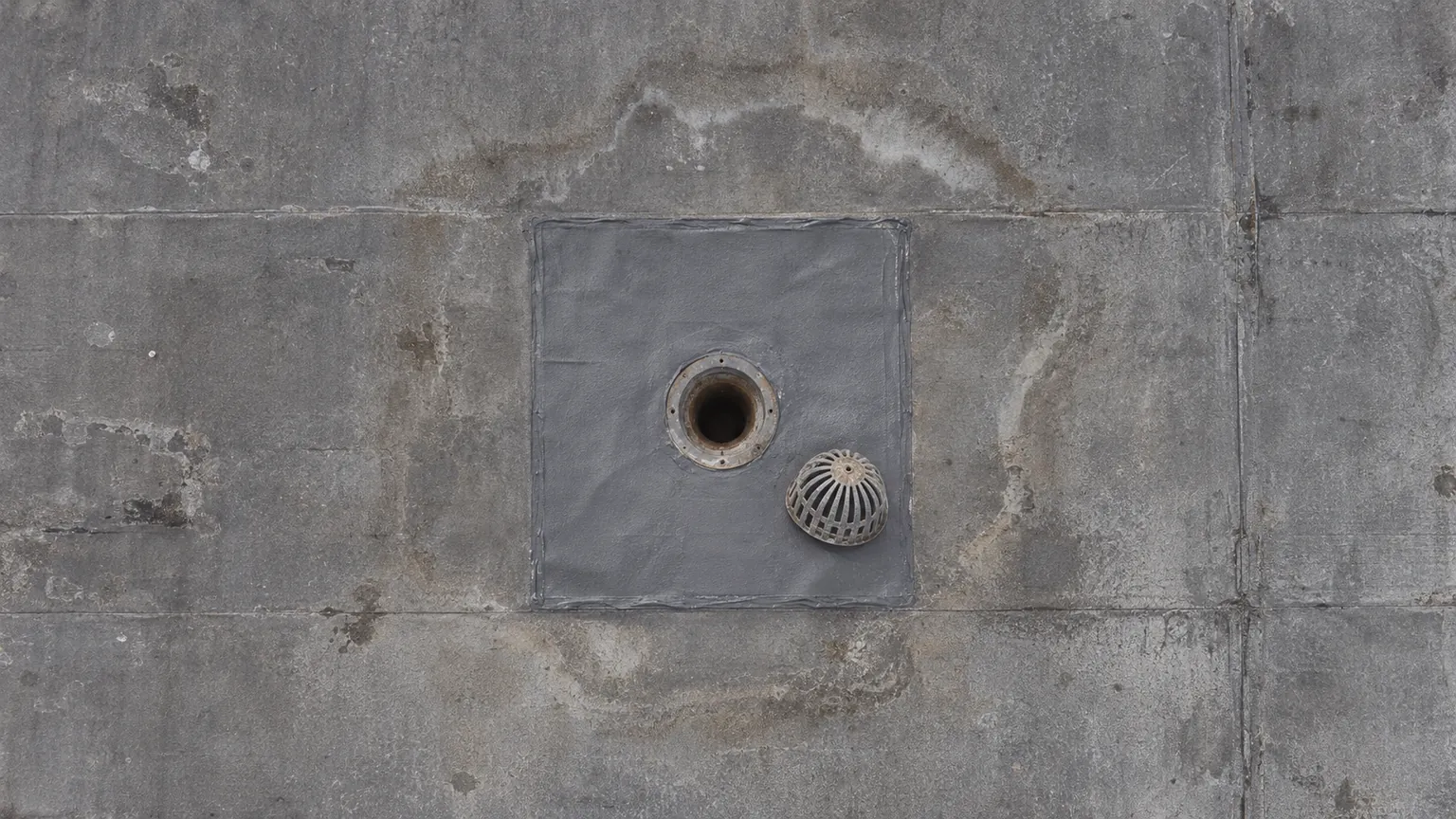
- One outlet needs a new seal
- Work Area
- A few squares around the leak
- Next Step
- Repair after the scope is agreed
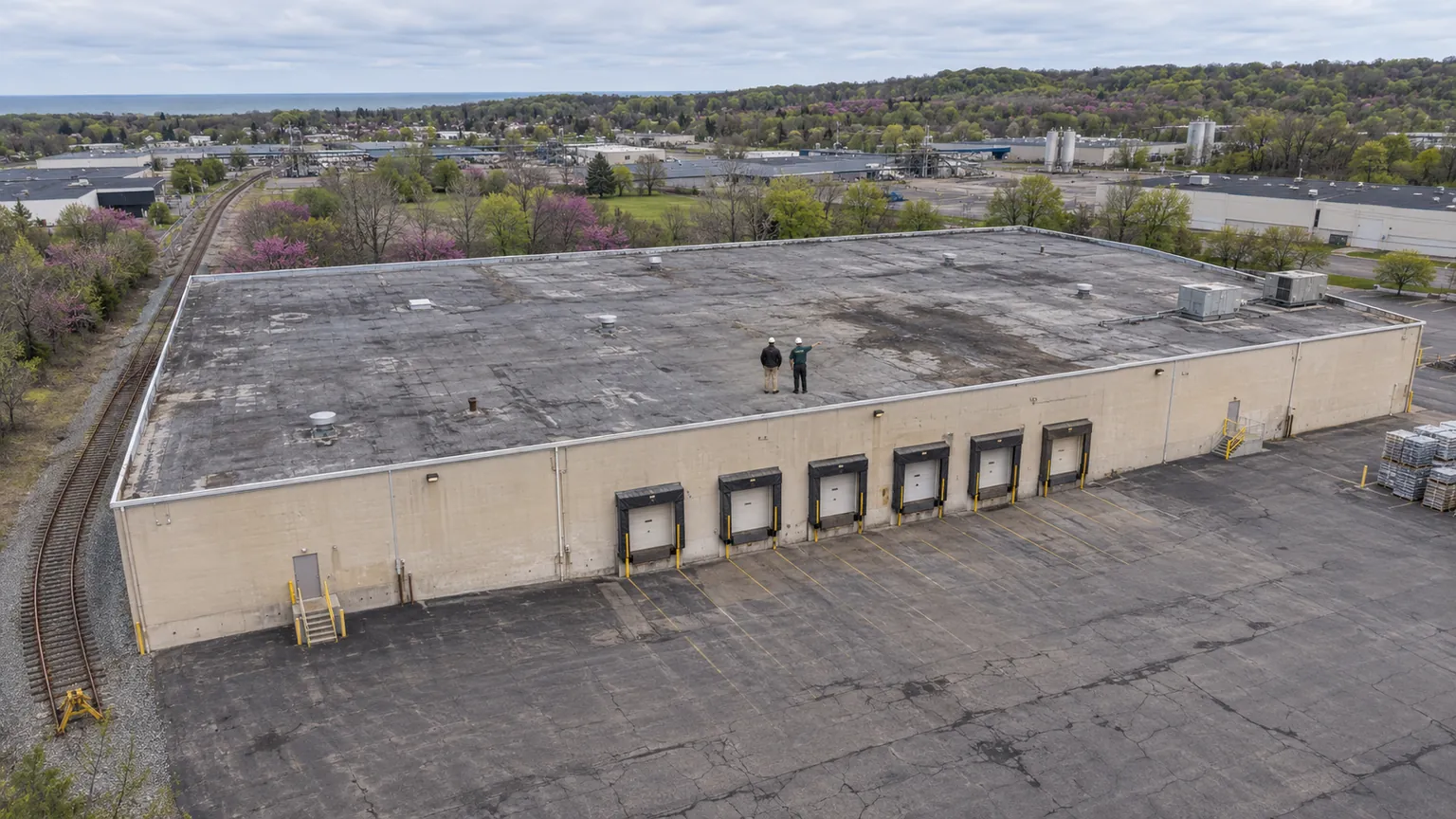
As an Erie flat roof repair contractor, we cut out wet insulation, rebuild drains, and repair membrane laps and blisters on commercial low-slope roofs.
Erie flat roof repair starts with what the cores show. A dry assembly around one defect gets a local repair; wet layers across a bay get rebuilt as a section.
Each condition below pairs what a manager sees indoors with the roof detail we usually trace it to.
Ceiling tiles stain near a column line after every long rain, and the stain grows after a freeze.
Insulation has compressed around the drain bowl, so water sits against the clamping ring and works into the lap.
Nothing drips, but forklift aisles under the roof get damp spots on humid days.
Raised pockets have cracked where foot traffic crosses them, letting moisture under the top ply.
Water shows along the wall after wind-driven rain off the lake.
Laps near the perimeter have opened and lifted where the membrane shrank back from the edge metal.
Drips appear during thunderstorms and stop when the rain eases.
Outlets back up during heavy flow and the rising water reaches a weak lap or a low flashing height.
The method follows the roof system and the condition we find, so each repair ties into membrane that is dry and bonding.
Crushed insulation around the outlet is cut out, tapered replacement board is set, and the drain bowl is reset so water reaches it instead of collecting beside it.
Cracked blisters in traffic paths are opened and patched with compatible material; intact blisters away from traffic are left alone when cores beside them read dry.
Open laps are cleaned to bare membrane, primed where the system calls for it, and closed with a matching cover strip or heat-welded patch.
Core results mark the boundary. Wet board comes out to the deck, the deck gets checked, and dry insulation goes back before new membrane ties in.
Every failure on a low-slope roof has a matching repair. These are the pairs we see most on warehouse and plant roofs.
Low insulation lets rain sit against the outlet seal through every freeze and thaw.
Rebuilt insulation and a reset bowl send water into the drain and take load off the lap.
Patches set over wet insulation trap moisture that keeps feeding the stain below.
Wet board is removed to the deck, so the new patch bonds to a dry assembly.
Foot traffic breaks raised pockets and opens a path for moisture beneath the top ply.
Opened pockets get closed with compatible material, and the walking path gets protection pads.
Membrane pulling back from the edge metal opens laps along the wall line.
Edge laps are reinforced and the membrane is retied to the perimeter detail.
Send the drain location and a photo of the ponding. We check the outlet, core the insulation around it, and quote the repair from what the cores show.
Get A Free EstimateFive steps take a flat roof from the first walk to a finished, documented repair.
We map ponding, blisters, and open laps across the roof and photograph each one against the interior leak reports.
Cores at each drain and patch show whether insulation is dry, damp, or saturated, and that sets the repair edge.
You receive a list of every repair area, the materials matched to your membrane, and what gets left for later.
Wet material comes out, the deck is checked, insulation is replaced, and membrane ties into dry roof on all sides.
Outlets get flow-checked after the repair and each finished detail is photographed for your maintenance file.
Flat roofs share walls, curbs, and production space with other roof work. These three services often come up on the same building.
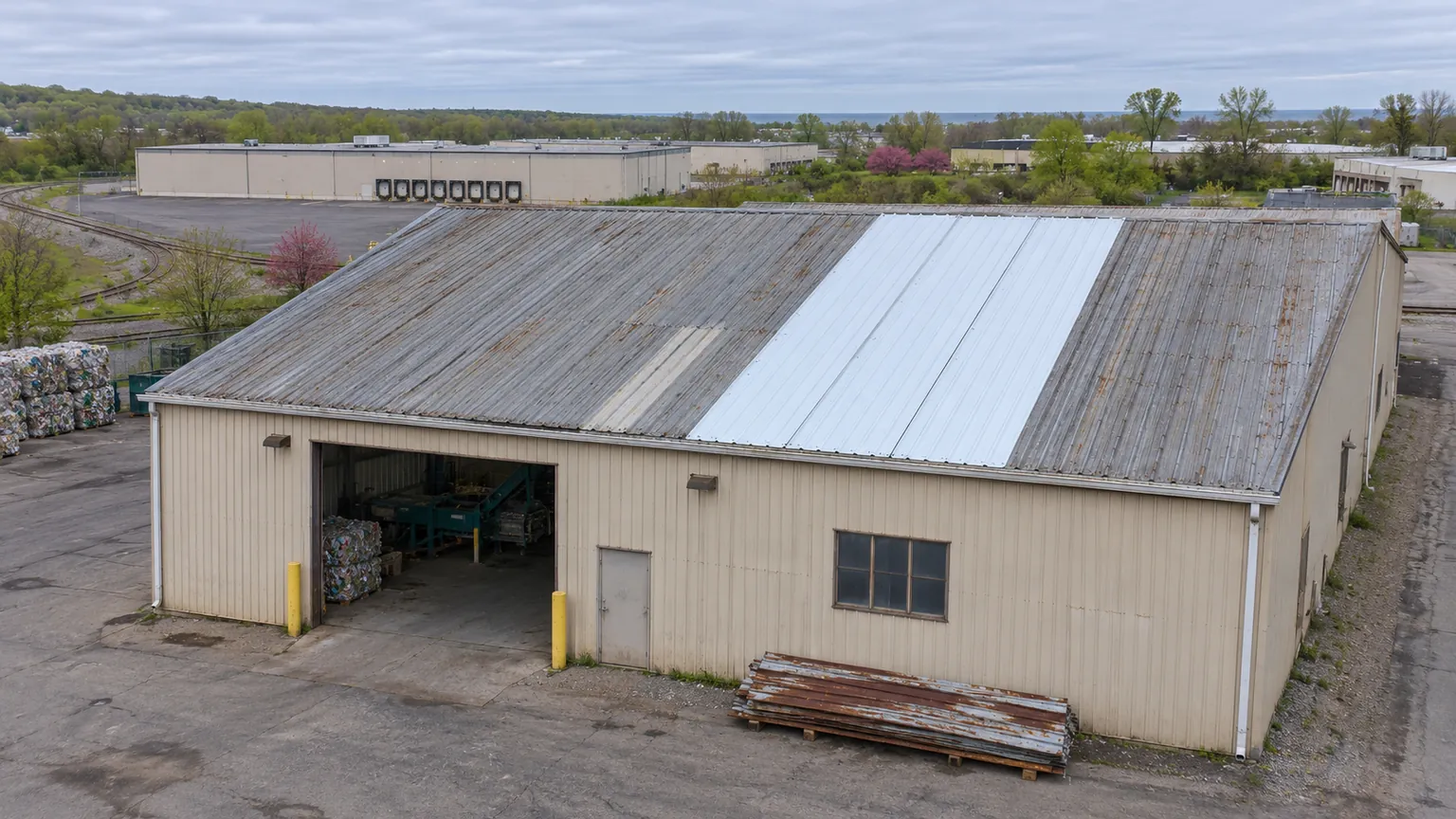
Metal additions often tie into a flat roof at a wall or curb, so panel and flashing repair belongs in the same plan.
Metal roof repair details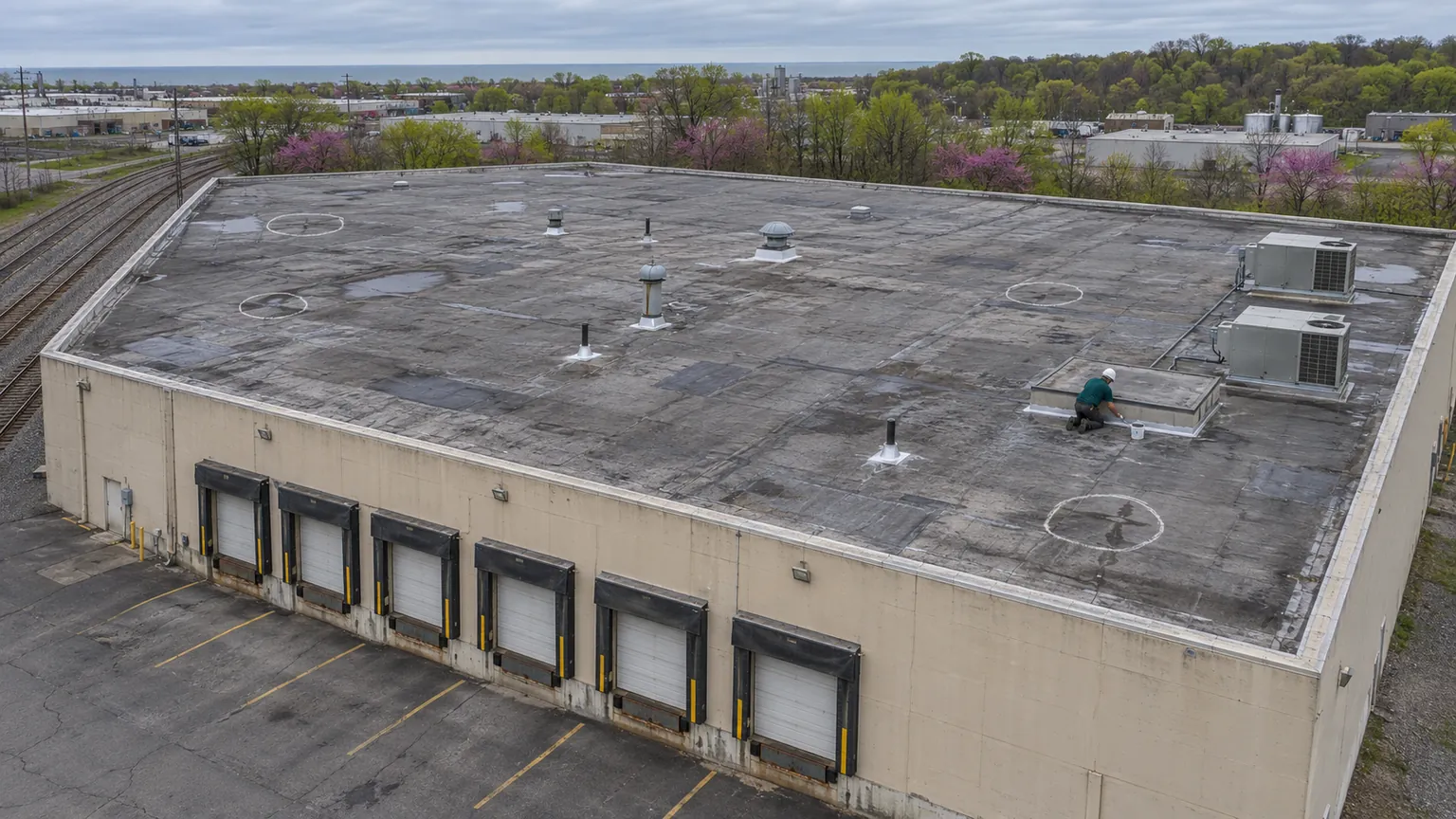
Drips that wander from the patched area point to water traveling under the membrane, which leak tracing follows to its entry.
Leak repair details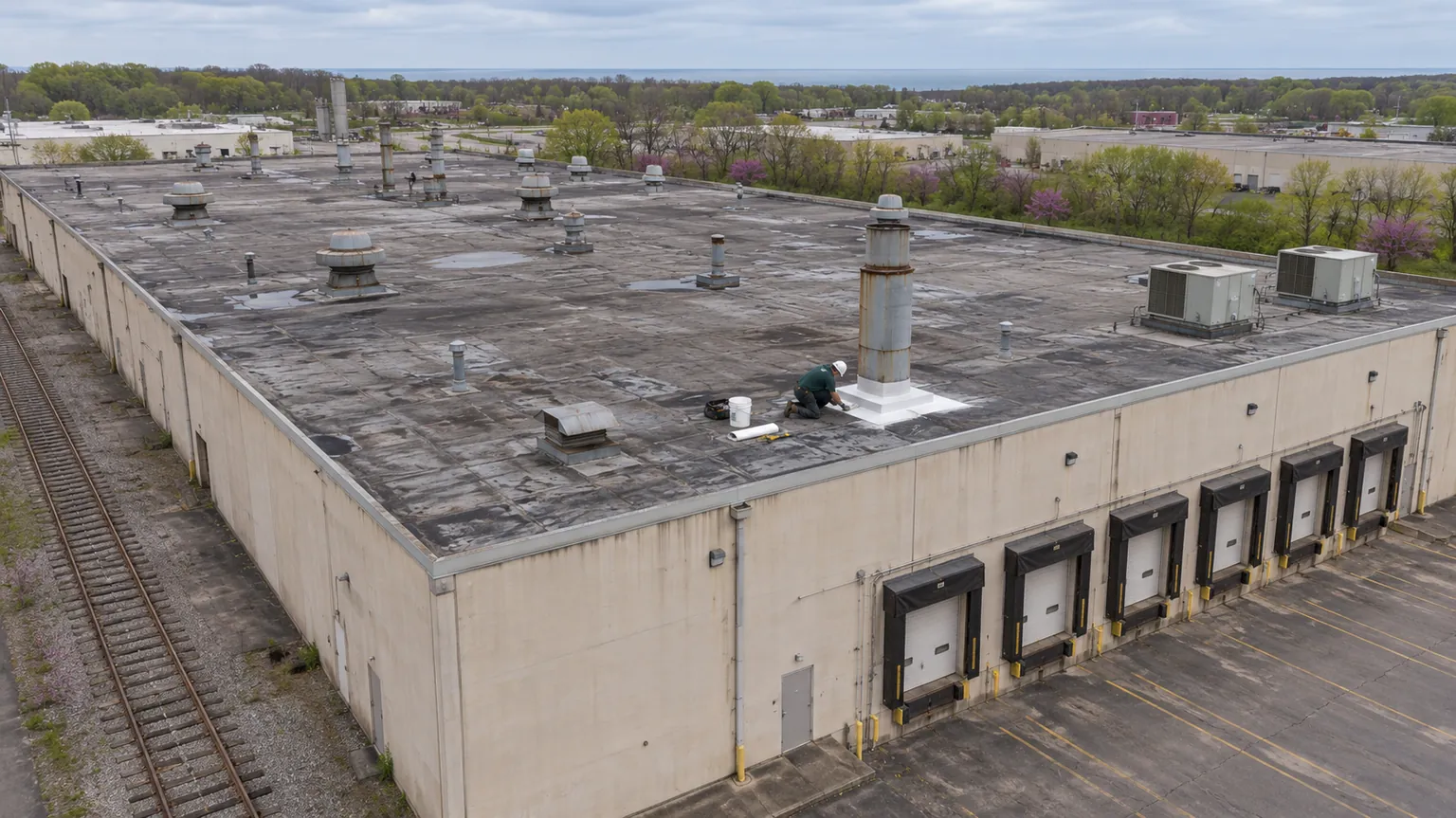
Plant roofs add stacks, exhaust fans, and production below, so drain and seam work gets sequenced with the facility.
Industrial repair detailsAnswers about blisters, winter work, heavy rain, and ponding on low-slope commercial roofs.
Often, yes. We check each blister for cracking, foot traffic, and moisture underneath, then repair the ones that need it. Opening an intact blister without a planned closure can start a new leak, so untouched pockets stay closed when cores beside them read dry.
Yes, when the cores confirm that crushed insulation is holding the water. We check the deck and the drain connection first, then replace the low board and reset the outlet. A patch laid over the same depression leaves the water sitting where it was.
Blisters on routes to rooftop units get opened, dried, and closed with matching material, then protected with walkway pads. Pockets off the traffic path are tracked on the roof map and checked again at the next inspection instead of being cut open.
Wet surfaces and cold limit most permanent membrane work. We check access, surface temperature, and the forecast before choosing the material. Melting snow leaves the roof wet, so temporary protection holds the area until conditions allow the permanent repair to bond.
Restricted outlets let heavy rain rise high enough to reach weak laps or low flashing. We inspect the drains and the roof around them while tracing the water inside. Clearing the outlet helps, and any damaged lap or flashing it exposed gets repaired too.
Some of it is. Temporary seals, drain clearing, and certain cold-applied repairs go on in winter when the surface is dry. Heat-welded and adhered membrane work needs a dry, warmer window, so we schedule it for the next stretch that fits the product.
Tell us where water stands or drips and how to reach the roof. We core the area, write the scope, and repair it.