Traced Leak Repair
- Starting Point
- Drip log and roof layout
- What Gets Checked
- Coping, edges, drains, seams
- Wet Material
- Mapped and cut out
- Repair Edge
- Set by the trace
- Result
- Entry point closed
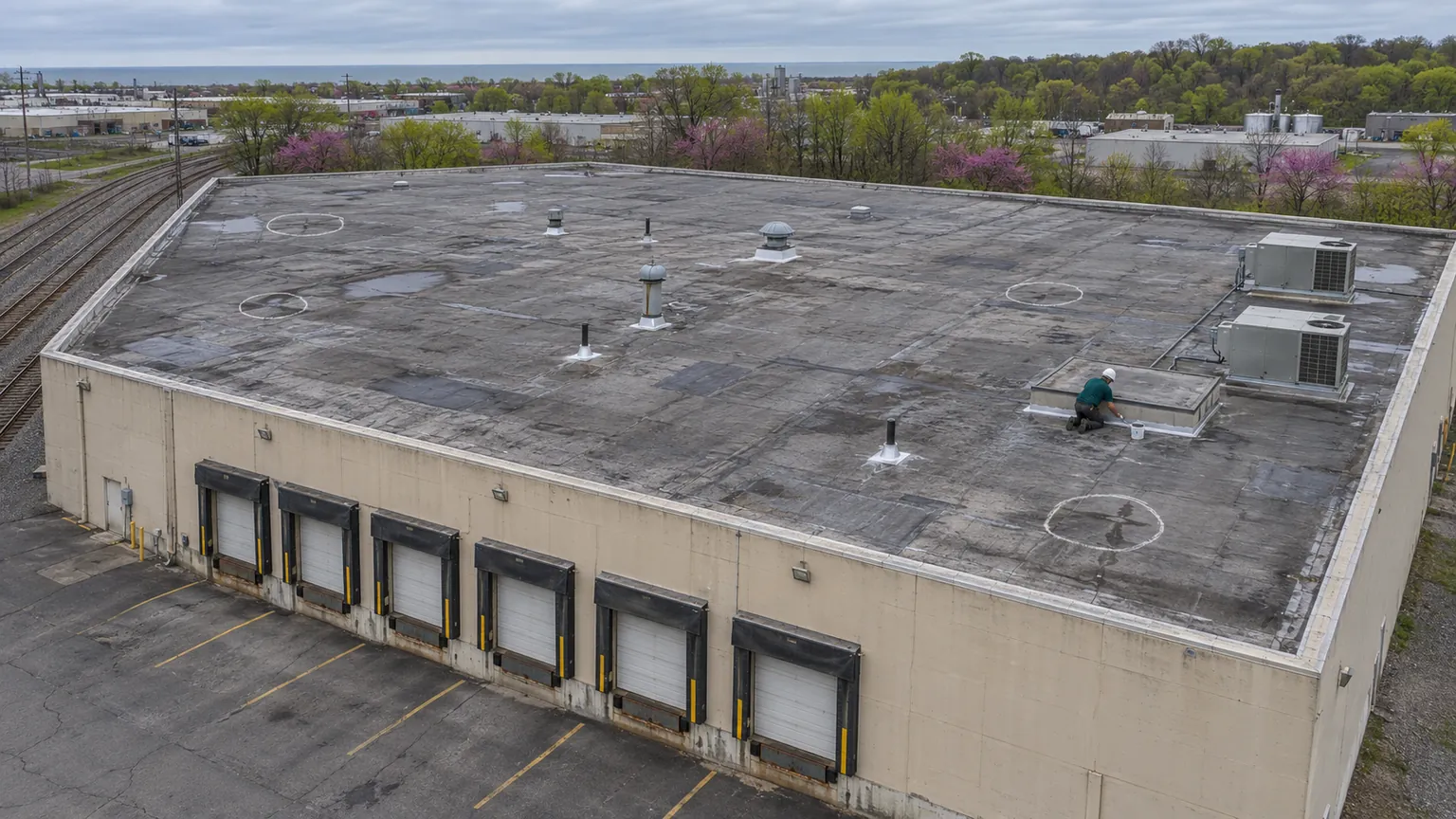
As an Erie commercial roof leak repair contractor, we trace drips back to the entry point and repair the parapet, edge, drain, or seam that lets water in.
Erie commercial roof leak repair follows the water past the drip. A patch set straight above the stain often misses an entry point several bays away.
Leaks rarely drip where they enter. These pairs show common indoor signs beside the roof detail behind them.
Paint bubbles and a tide line form along the wall a few feet below the roof.
Coping joints at the parapet cap have opened, and water runs down behind the base flashing.
On a mild day after heavy snow, water shows near the eave with no rain falling.
An ice dam at the edge is holding meltwater against a lap or a gutter connection.
Dock doors and the floor inside them get wet during hard storms only.
Rain is overloading an outlet or scupper, and the backup reaches a wall or equipment transition.
Water lands on the top pallets in one aisle, far from any roof penetration.
Water entered at a seam or curb upslope and traveled along the deck flutes before dropping.
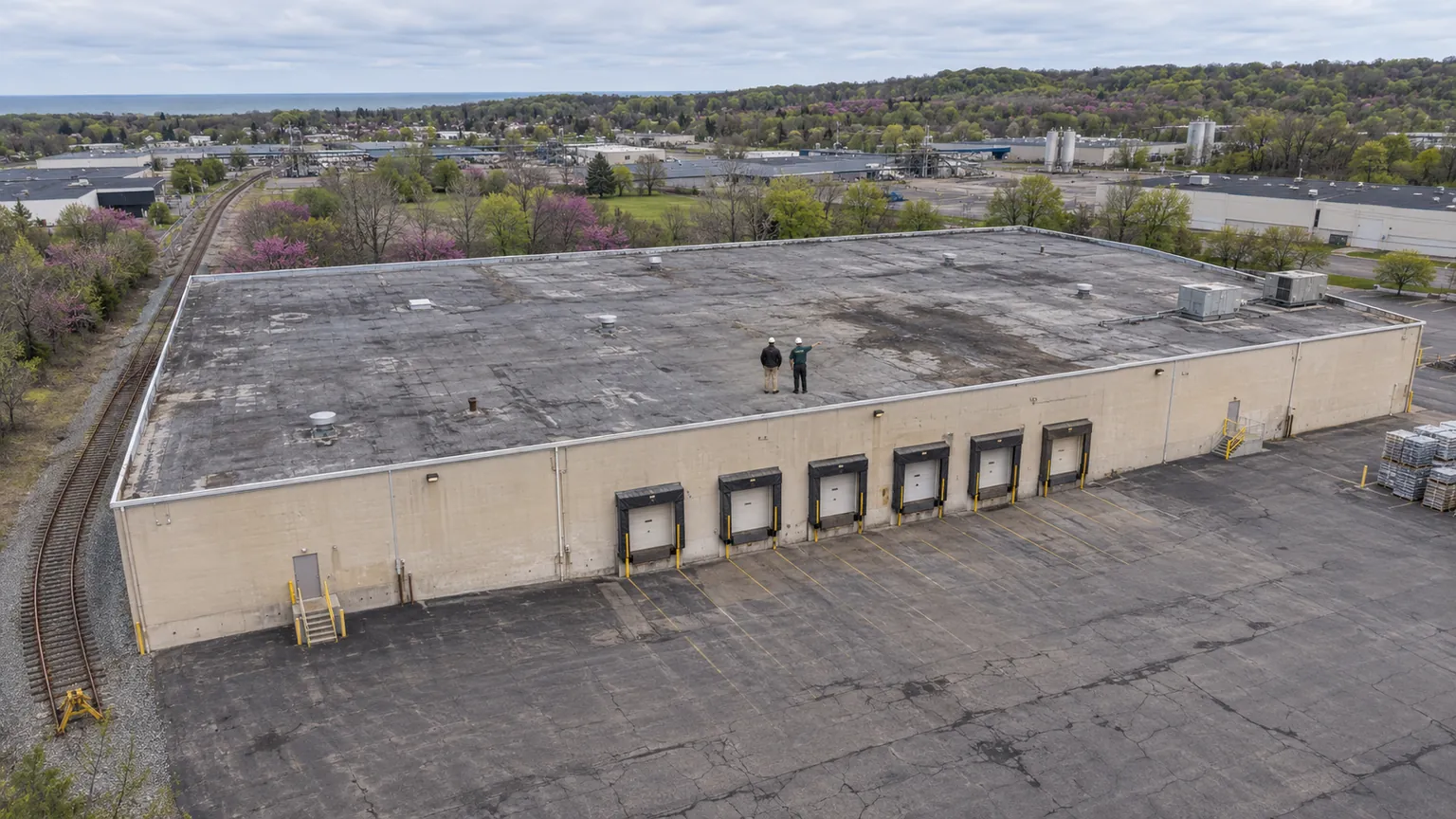
Tracing uses your drip records, the roof layout, and moisture checks to find the opening before any repair begins.
Coping joints, masonry, and base flashing are inspected as one water path, and the repair boundary follows the wall detail that failed.
After the ice clears, we check the edge laps, gutters, and drains the dam held water against, plus the insulation under them.
Staff records of the rack, aisle, and timing get laid over the roof plan, and the search moves upslope from the drip.
Cores and meter readings show how far water spread under the membrane, so wet layers come out with the repair.
A traced repair closes the opening and deals with the water already inside the roof.
Rain enters above the roof line and runs behind the flashing, so roof patches below it miss the source.
Coping joints and base flashing get repaired as one detail, closing the path at the wall.
Ice dams push water into laps and gutter connections during every thaw.
Damaged edge laps and gutter connections are rebuilt, and wet insulation under them is replaced.
Heavy rain backs up at a restricted drain and reaches details that stay dry in light rain.
Outlets get cleared and resealed, and any low flashing near them is raised or rebuilt.
Water left in the assembly keeps dripping and staining long after the opening is sealed.
Mapped wet areas are cut out and replaced, so the drips stop with the repair.
Keep a short log of where and when water appears. Send it with your request and we start the trace from your notes and the roof layout.
Get A Free EstimateFive steps take a leak from the first report to a closed and checked entry point.
We gather where water appears, the weather when it started, and any recent roof or equipment work.
Inspection starts above the drip and moves toward walls, curbs, drains, and seams along the water path.
Cores and readings show how much insulation took on water, which sets the size of the repair.
The failed coping, lap, drain, or flashing is repaired, and wet layers around it are replaced.
After the next weather event, we review the drip locations and log the result with photos of the repair.
Once the entry point is found, the fix usually falls under one of these three services.
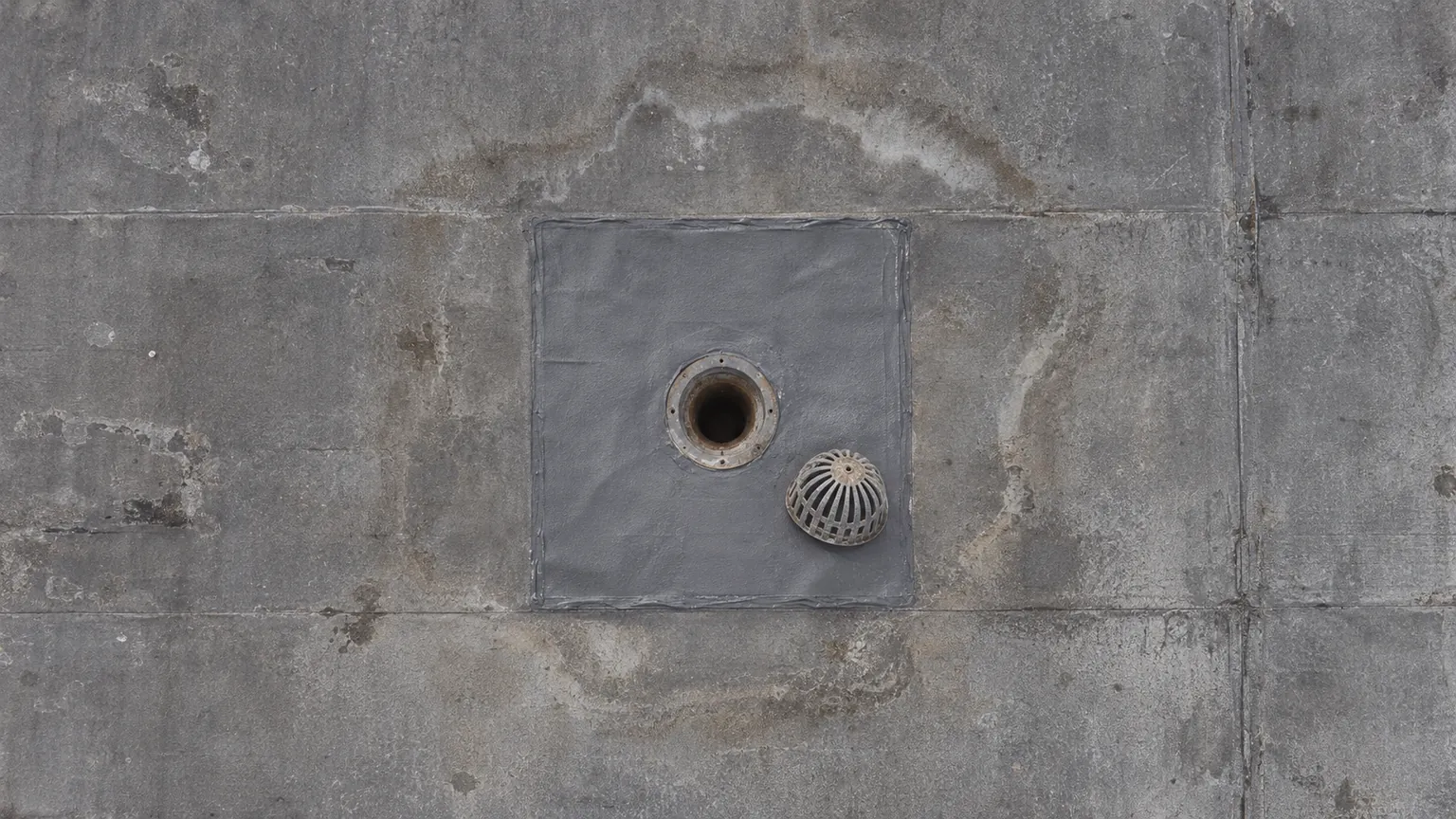
Once the path is found at a lap or drain, membrane and insulation repair closes it and replaces the wet material.
Flat roof repair details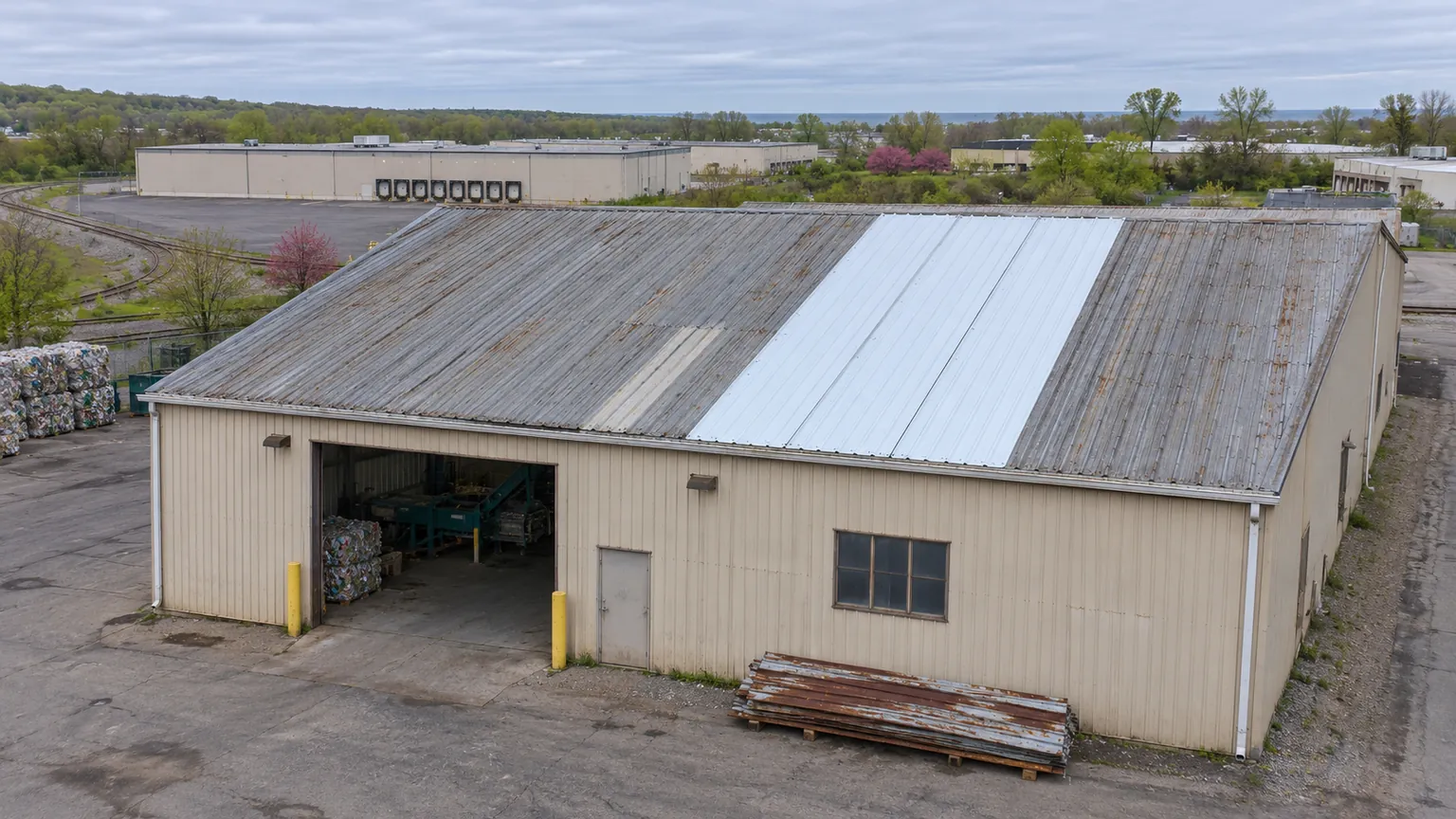
Panel roofs leak at curbs, laps, and screw rows, and those details get corrected after the trace confirms them.
Metal roof repair details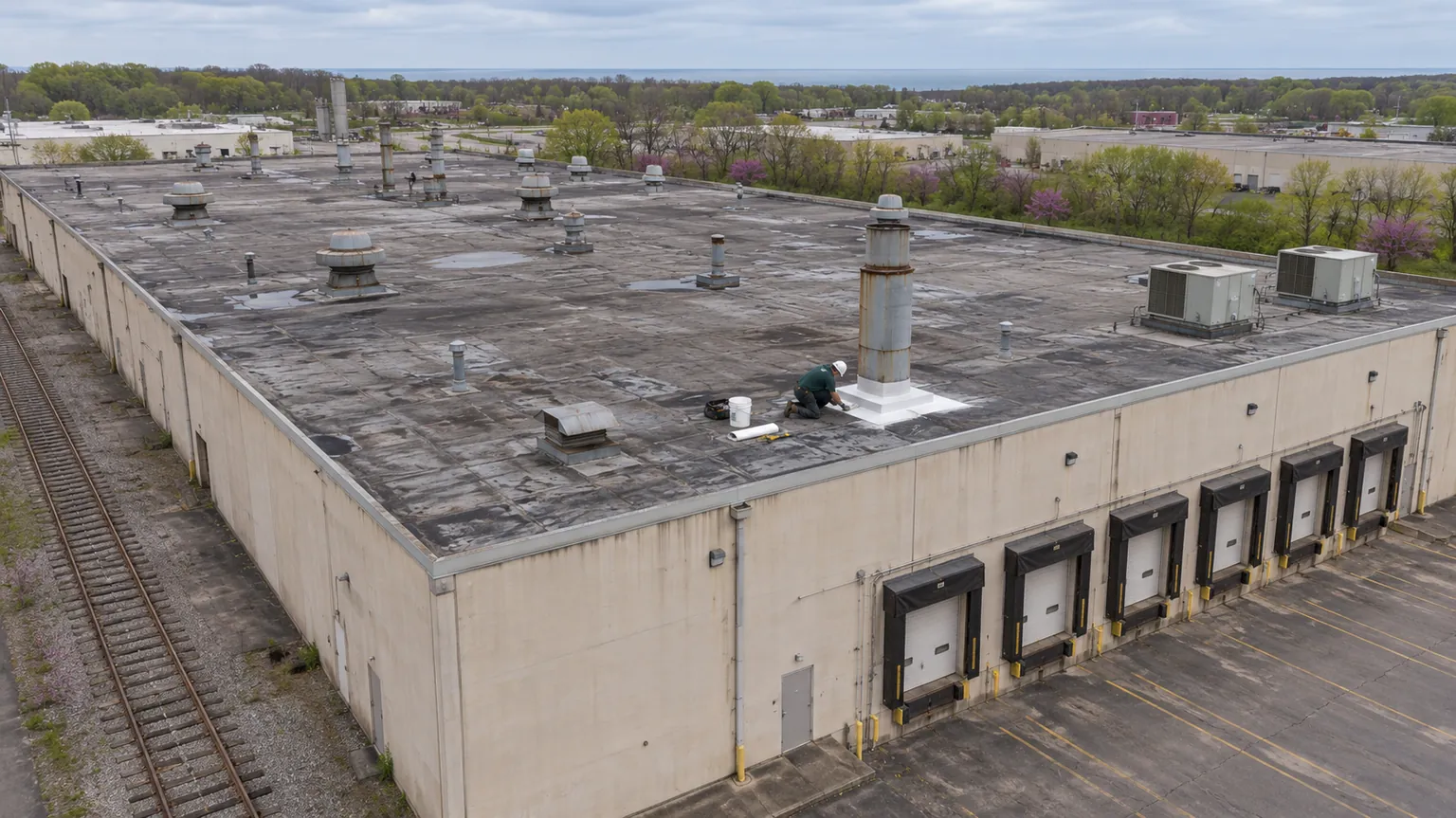
Production water and roof water look alike on a plant floor, so industrial repair starts by separating the two.
Industrial repair detailsAnswers on parapets, ice dams, heavy rain, and tracing leaks above racks.
Yes. Water entering at the coping travels down behind the base flashing and shows inside as a roof leak. We inspect the coping joints, masonry, and base flashing together, and the repair boundary follows that path instead of the nearest seam.
They block runoff and hold meltwater against laps, gutters, and drain details. When the roof is safe to reach, we follow the drainage route and check the seams and flashing the ice sat on. Melting the ice leaves any wet insulation and the opening that admitted water behind.
No. A roof in working order holds water out in hard storms too, so a heavy-rain leak points to a condition worth tracing, usually an outlet that backs up or a detail set too low. The storm only shows where the weakness is.
Leaks over a loading area during heavy rain point to a condition that needs investigation. We compare the timing with outlets, seams, and wall or equipment transitions above the docks. Rain intensity narrows the likely paths, and the repair goes where the cause is found.
Record the rack, the aisle, the time, and the water path you see from a safe spot on the floor. We compare those notes with the roof layout and inspect beyond the point straight overhead, because water runs along deck and framing before it drops.
Most start at a detail upslope of the drip: a curb, a wall flashing, a drain, or a lap crossed by foot traffic. Deck flutes carry water sideways for several feet, so the search covers the whole run that drains toward the wet aisle.
Send the drip locations and when they appear. We trace the water, map the wet area, and repair the entry point.