Roof Water
- Timing
- Follows rain or thaw
- Location
- Seams, curbs, drains
- Water Type
- Clear runoff
- Who Checks
- Roof inspection
- Next Step
- Repair the roof detail
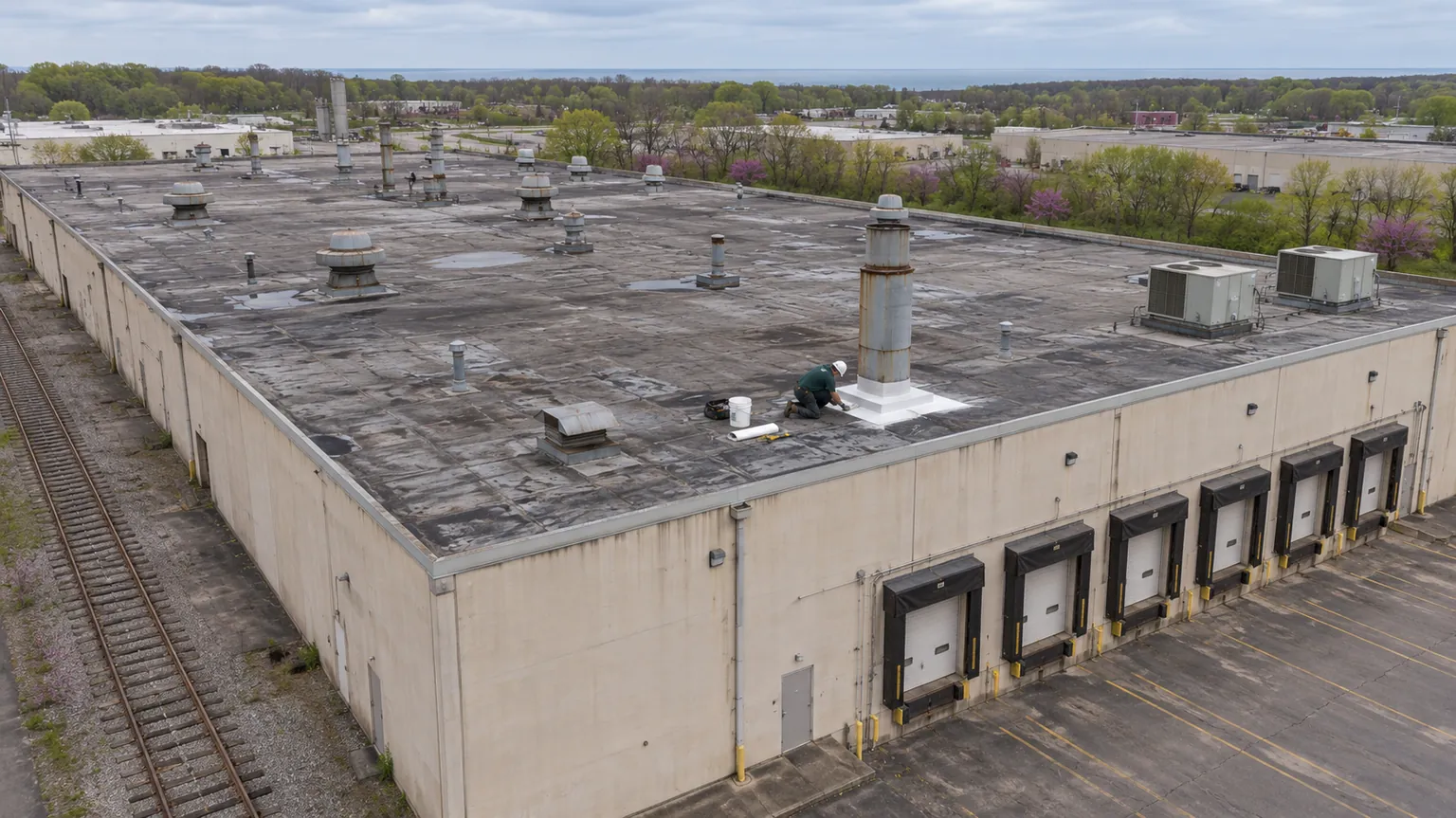
As an Erie industrial roof repair contractor, we repair exhaust fan curbs, stack flashing, drains, and damaged deck on plant roofs above working production floors.
Erie industrial roof repair starts by sorting roof leaks from water that comes off equipment, since both land on the same plant floor.
Plant roofs carry stacks, fans, and drains over working floors. These pairs connect common floor reports to their roof sources.
The same spot below an exhaust fan gets wet again a few months after each patch.
Vibration and discharge deposits keep breaking the curb flashing, and the patch never addressed either one.
A ring of water forms around a column below a roof drain after storms.
Deck around the drain has rusted, so the bowl has settled and the flashing tore loose.
Insulation on pipes near a process stack stays wet through the winter.
Flashing at the stack base has split from heat cycling and lets snowmelt in.
Water spots appear on equipment covers after rain, near a roof hatch or curb.
Open laps near the hatch take water during storms and drain it along the deck to the line.
Each method is planned with the facility so the roof is opened only where and when the floor below is ready.
Sections are opened one at a time with separation, equipment covers, and debris control set below before any material comes off.
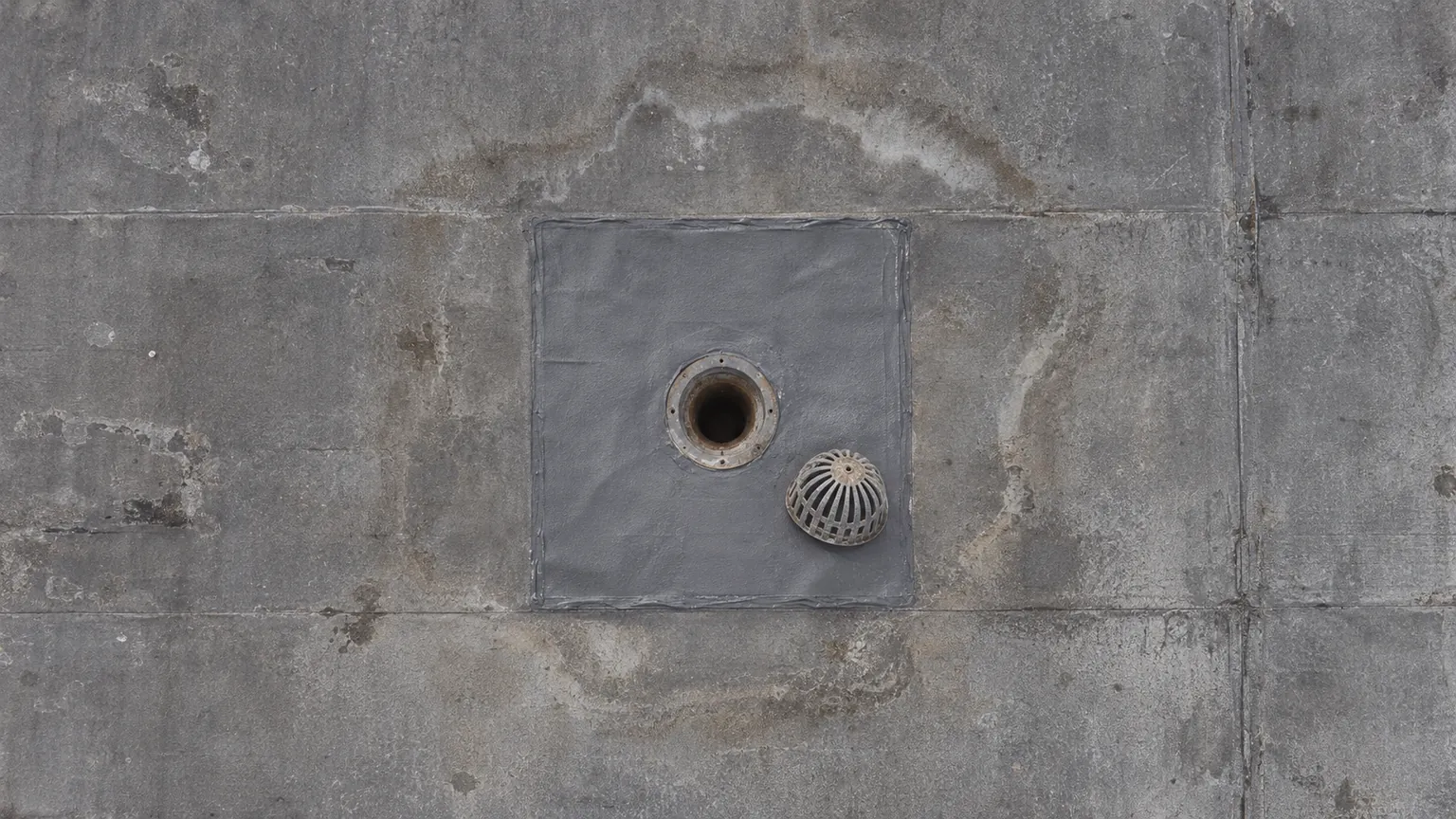
Rusted deck around the outlet is replaced, the bowl is reset, and insulation and membrane are rebuilt into a tight drain connection.
Curbs are checked for movement and residue, the equipment side is coordinated, and new flashing goes on once the cause is handled.
Stack bases get new flashing sized for the pipe movement and heat, with storm collars and counterflashing where they apply.
Plant roofs fail in ways tied to the work below. Each failure here sits beside the repair that answers it.
Fan movement cracks flashing and loosens the curb, so patches fail again within a season.
Curb attachment and flashing are rebuilt after the equipment side addresses the vibration.
Corroded deck lets the drain settle and tears the membrane connection open.
Damaged deck gets replaced before the drain is rebuilt, giving the outlet firm support.
Hot pipes crack rigid flashing and dry out sealant at the base.
Flashing sized for heat and movement replaces the cracked detail at each stack.
Exhaust residue softens membrane around the fan and shortens the life of every patch there.
Damaged membrane is cut out, and the equipment owner gets a note on the discharge source.
Call with the line or area affected and how the roof is reached. We plan protection for the floor first and schedule the repair with your facility staff.
Call UsPlant repairs add a planning step with the facility before any roof section is opened.
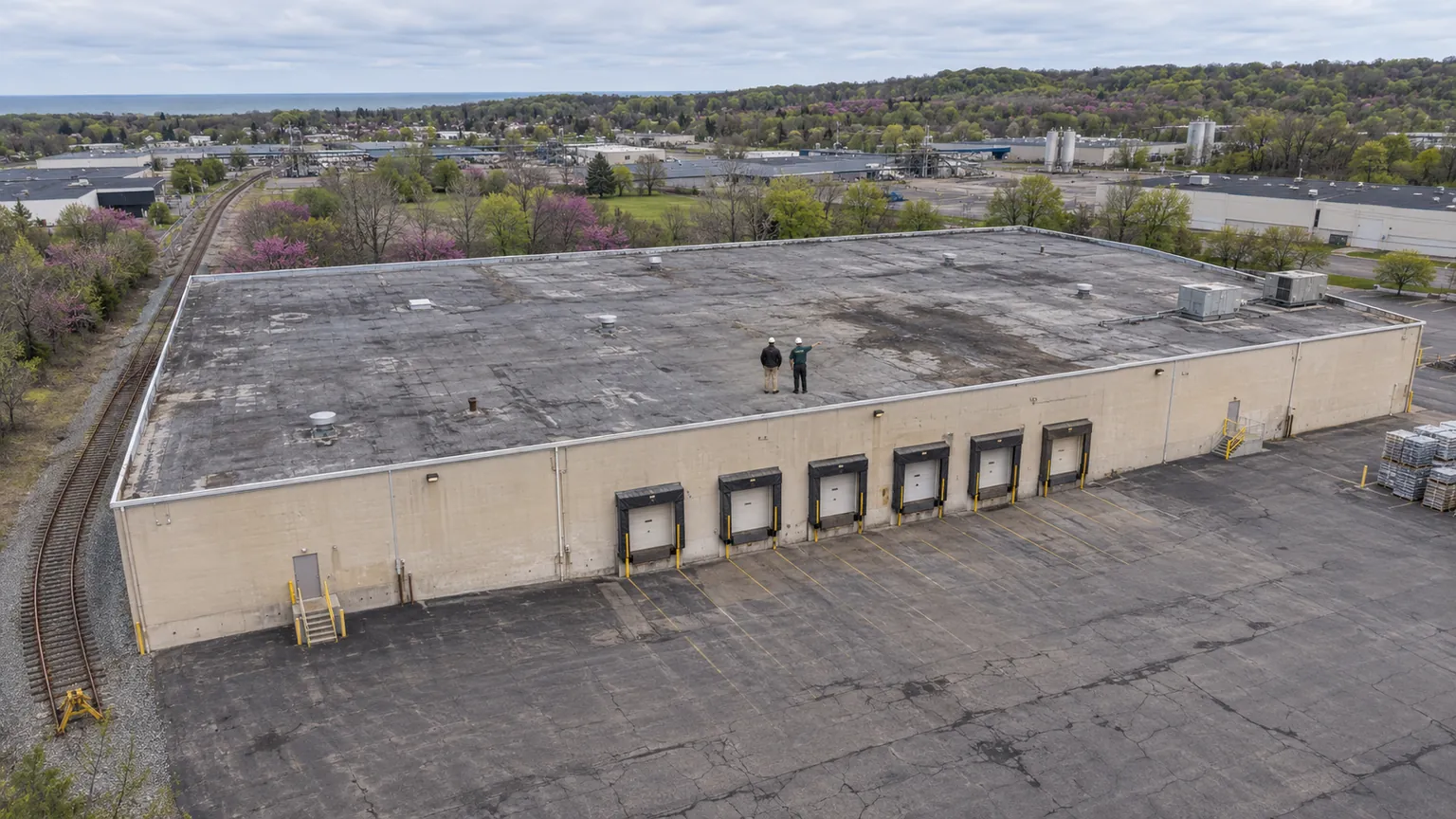
We walk the roof with facility staff, note stacks, fans, and drains, and mark where equipment water could be involved.
Separation, equipment covers, and work hours get agreed for each section before material comes off.
The first section is opened, wet insulation and damaged deck come out, and the area gets closed the same shift.
Drains, curbs, and stack flashing are rebuilt with new deck and insulation where the opening showed damage.
Finished sections are walked with your staff, and photos go into the plant maintenance records.
Plant roofs mix membrane, metal additions, and hard-to-trace leaks. These services often run alongside industrial work.
Most plant roofs are low-slope membrane, so lap, blister, and drain repair carries over to production buildings.
Flat roof repair details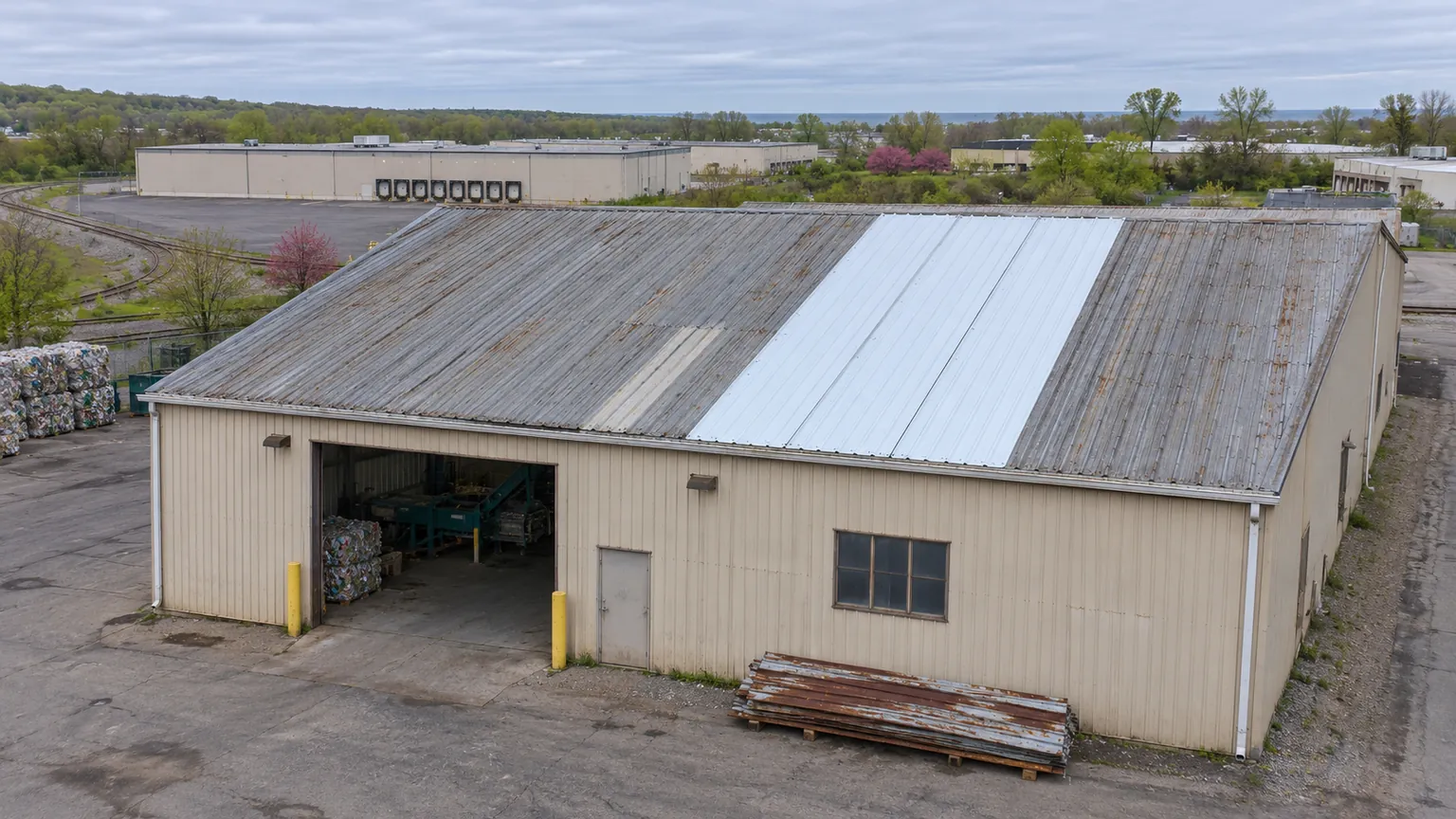
Metal sheds and process additions beside the plant need their own panel and curb flashing repair.
Metal roof repair details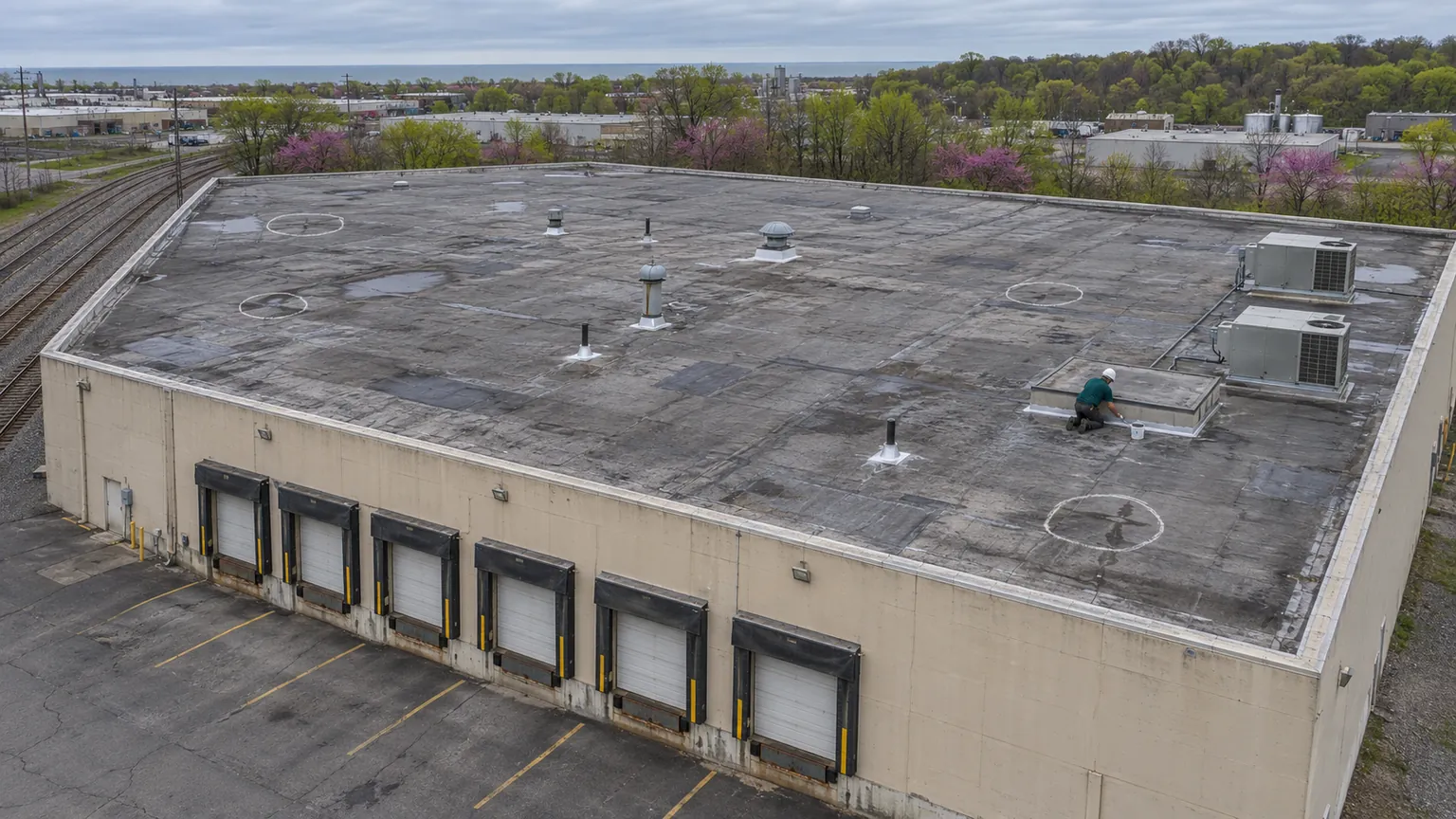
Leaks that return after equipment work call for a trace that covers seams, curbs, and the wall above.
Leak repair detailsAnswers on production, drains and deck, equipment water, and exhaust fans.
Often, with separation, equipment covers, and a work sequence agreed with the facility. We review water and debris exposure with your staff before opening anything. Some processes need different operating arrangements, so the plan names those limits ahead of time.
Compare when the water appears with the weather and with equipment cycles. We inspect roof seams and curbs while your personnel check equipment drainage. A wet spot below a unit is a clue, and the repair follows the water path that the checks confirm.
Tracing the leak, separating it from equipment water, protecting the floor below, and repairing the roof detail with any wet insulation or damaged deck around it. Each step is planned with facility staff, and the finished work is photographed for your maintenance records.
Yes. Rusted or weakened deck around the drain is repaired before the roof connection is rebuilt. We check how far moisture spread and the condition of the drain assembly, because new flashing on poor support tears loose again.
Vibration, discharge deposits, or an unstable curb keep breaking the flashing. We inspect those conditions before choosing new flashing or membrane. When the cause is the equipment, the roof repair is coordinated with equipment service so the next patch is not working against it.
Temporary protection holds most fan curbs until a planned shutdown, and we can schedule the permanent repair for that window. Active water over equipment or electrical panels gets a temporary seal sooner, once the roof can be reached safely.
Tell us which area of the plant is affected and how production runs. We plan the protection and repair the roof.